Conditions
Bell’s Palsy Protocol Acid Reflux and GERD Acne Protocol Allergies, Asthma, and Eczema Anemia Ankylosing Spondylitis Protocol Arrhythmia and Afib Protocol Asthma Protocol Atherosclerosis ATP + Attention Deficit Hyperactivity Disorder (ADHD) Atypical Bacterial and Mycobacterial Infections- Respiratory Avascular Necrosis & PS Baker's Cyst Bone Fracture Protocol Bone Spur Bronchiectasis Bulging and Herniated Disc Protocol Bunion Bursitis C. Difficile Cancer Care Candida & Fungal Infections Protocol Cardiovascular Cataracts Protocol Chronic Kidney Disease (CKD) Protocol Cold and Flu Concussion Treatment COPD, Emphysema, and Chronic Bronchitis Protocol Cyst Protocol Cystic Fibrosis Digestive Tract Bacterial and Viral Infections Diverticulitis Dupuytren Contracture Ear Infection & Tinnitus Eczema & Atopic Dermatitis Erectile Dysfunction (ED) Protocol Fatty Liver Disease & Hepatitis Protocol Female Infertility Fibromyalgia Food Allergies and Intolerances Frozen Shoulder & Rotator Cuff Injury Gallbladder Stone Glaucoma & Cataracts Protocol Gout Hair Loss Protocol Hashimoto's Thyroiditis Heart Inflammation Heavy Metal Toxicity Hernia High Blood Pressure Hip Pain Protocol Hyperlipidemia (High Cholesterol) IBD, Ulcerative Colitis, Crohn's Disease IBS Insomnia Kidney Stone Leaky Gut Liver Cirrhosis Long COVID Symptoms Low Testosterone Lupus Lyme Disease Macular Degeneration Male Infertility Men's Health Meniscus and Cartilage Tear Menopause Migraine and Headache Nervous System Viral Infections and Complications Neuropathy OA Customized Treatment Osteoarthritis and Bone-on-Bone Protocol Parasite Infection Protocol Parkinson's Disease PMS, Post Menstrual Syndrome, & Premenstrual Dysphoric Disorder Post-Surgical Wound Healing and Scar Removal Protocol Post-Viral Syndrome Prostate Enlargement Psoriasis and Psoriatic Arthritis Pulmonary Fibrosis & ILD Rheumatoid Arthritis Sarcoidosis Protocol Sinusitis Sinusitis and Nasal Congestion Protocol Skin & Nail Fungal Infections Protocol Sleep Apnea Protocol Sprains and Strains Staph & Strep Infections Stenosis and Bone Spur Stress, Anxiety, Depression Stress, Anxiety, PTSD and Depression Stroke and Post-Stroke Recovery Teeth & Gums Protocol Telomere + Tendinitis Thyroid Disorders Thyroid Disorders Protocol TMJ Syndrome Treatment Sequence Type II Diabetes Urinary Incontinence & Pelvic Organ Prolapse Protocol Uterine Fibroids & Ovarian Cysts UTI Viral Infections Vitiligo Protocol WeiDetox Weight Control Women's Health
Quick Links
Find a Practitioner Practitioner Sign Up Contact Us Subscribe to Monthly Newsletter
Condition
Bell’s Palsy Protocol Acid Reflux and GERD Acne Protocol Allergies, Asthma, and Eczema Anemia Ankylosing Spondylitis Protocol Arrhythmia and Afib Protocol Asthma Protocol Atherosclerosis ATP + Attention Deficit Hyperactivity Disorder (ADHD) Atypical Bacterial and Mycobacterial Infections- Respiratory Avascular Necrosis & PS Baker's Cyst Bone Fracture Protocol Bone Spur Bronchiectasis Bulging and Herniated Disc Protocol Bunion Bursitis C. Difficile Cancer Care Candida & Fungal Infections Protocol Cardiovascular Cataracts Protocol Chronic Kidney Disease (CKD) Protocol Cold and Flu Concussion Treatment COPD, Emphysema, and Chronic Bronchitis Protocol Cyst Protocol Cystic Fibrosis Digestive Tract Bacterial and Viral Infections Diverticulitis Dupuytren Contracture Ear Infection & Tinnitus Eczema & Atopic Dermatitis Erectile Dysfunction (ED) Protocol Fatty Liver Disease & Hepatitis Protocol Female Infertility Fibromyalgia Food Allergies and Intolerances Frozen Shoulder & Rotator Cuff Injury Gallbladder Stone Glaucoma & Cataracts Protocol Gout Hair Loss Protocol Hashimoto's Thyroiditis Heart Inflammation Heavy Metal Toxicity Hernia High Blood Pressure Hip Pain Protocol Hyperlipidemia (High Cholesterol) IBD, Ulcerative Colitis, Crohn's Disease IBS Insomnia Kidney Stone Leaky Gut Liver Cirrhosis Long COVID Symptoms Low Testosterone Lupus Lyme Disease Macular Degeneration Male Infertility Men's Health Meniscus and Cartilage Tear Menopause Migraine and Headache Nervous System Viral Infections and Complications Neuropathy OA Customized Treatment Osteoarthritis and Bone-on-Bone Protocol Parasite Infection Protocol Parkinson's Disease PMS, Post Menstrual Syndrome, & Premenstrual Dysphoric Disorder Post-Surgical Wound Healing and Scar Removal Protocol Post-Viral Syndrome Prostate Enlargement Psoriasis and Psoriatic Arthritis Pulmonary Fibrosis & ILD Rheumatoid Arthritis Sarcoidosis Protocol Sinusitis Sinusitis and Nasal Congestion Protocol Skin & Nail Fungal Infections Protocol Sleep Apnea Protocol Sprains and Strains Staph & Strep Infections Stenosis and Bone Spur Stress, Anxiety, Depression Stress, Anxiety, PTSD and Depression Stroke and Post-Stroke Recovery Teeth & Gums Protocol Telomere + Tendinitis Thyroid Disorders Thyroid Disorders Protocol TMJ Syndrome Treatment Sequence Type II Diabetes Urinary Incontinence & Pelvic Organ Prolapse Protocol Uterine Fibroids & Ovarian Cysts UTI Viral Infections Vitiligo Protocol WeiDetox Weight Control Women's Health
Condition of the Month-April 2018
Meniscus and Cartilage Tear

Login as practitioner to view Wellness Recommendation.


Ligaments Structure


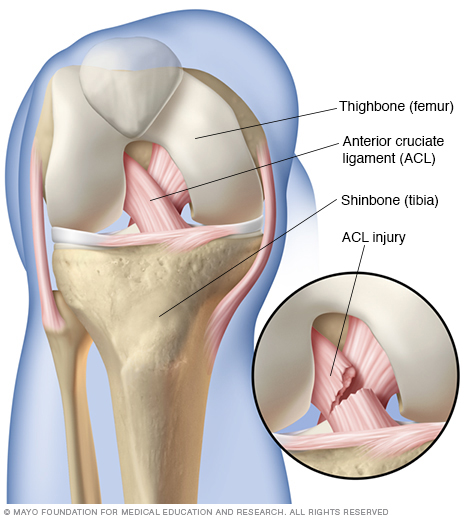
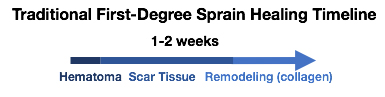
Ligaments are the connective tissue made up of collagenous fibers that attach bone to bone. Ligaments main function is to stabilize joints and help with range of motion when a tensile force is applied to the body. A ligament sprain with a partial or complete tear often occurs when there is a traumatic joint injury. The process to heal a ligament tear can be divided into three stages. In the first stage, the ligament ends retract and a hematoma is formed. In the second stage, scar tissue is formed by fibroblastic cells over the course of a few weeks. The third stage consists of matrix remodeling in which the scar tissue is replaced by proteoglycan and collagen. Due to this remodeling, ligament injuries exhibit a slow recovery process. Ligament injuries are most common in the ankles, wrists, shoulders including AC joint separations, and knees including the anterior cruciate ligament (ACL) and the medial collateral ligament (MCL). Depending on severity, ligament injuries can be classified into three degrees.

A first-degree sprain is the least severe and there is typically little tearing, pain or swelling, and joint stability is still good. It usually takes 1-2 weeks for the injury to heal.

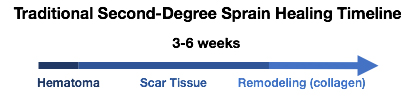
A second-degree sprain has the broadest range of damage with moderate ligament tear, moderate instability and moderate to severe pain and swelling. Recovery may take 3-6 weeks.

A third-degree sprain is the most severe as the ligament is completely ruptured, the joint is unstable and there is severe pain and swelling. Other tissue can often be damaged as well. These types of sprains often need surgical repair. Recovery for this kind of sprain is much longer, requiring 8-12 months for the ligaments to fully heal.


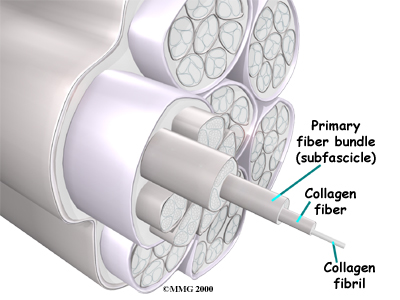
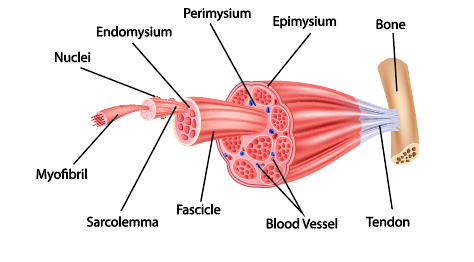
Skeletal muscles are connected to tendons that attach to the bone and consists of an arrangement of fibers. Each muscle fiber is made up of cylindrical muscle cells called a myofibril. Due to the abundant amount of blood supply and nerves in the area, muscles can perform their primary function of contraction allowing for weight bearing and skeletal movement. Muscle tears occur when there is damage to the muscle fibers due to overloading the muscle or fatigue from sustained postures. The normal healing process of a muscle tear also occurs in three stages. In the first stage, the ruptured myofibers contract and the gap is filled in with blood forming a hematoma. In the second stage, myogenic reserve cells and satellite cells are activated and begin repairing the damaged myofibers. Within 5 days to 1 week, the ruptured myofibers are replaced with the new regenerating myofibers. In the third stage, the regenerated myofibers mature and the remodeling phase is complete. Muscle tears are most common in the hamstrings, quadriceps, calf, and back.

Muscle Structure


Types of Muscle Tears
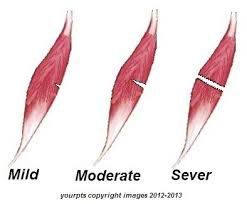


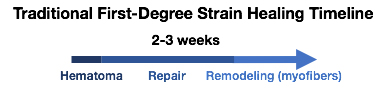
A first-degree strain indicates the least severe damage with little muscle tearing and mild tenderness. There is also mild pain with full range of motion. Recovery time is about 2-3 weeks.

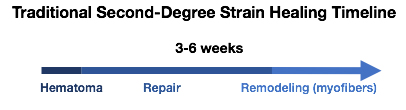
A second-degree strain occurs when the muscle has been torn and about 80% of tissue fibers have been ruptured. There is usually more pain, edema, and bruising; range of motion is also significantly reduced. There is normally swelling caused by the broken blood vessels in the area. Typically, it takes 2 to 3 weeks to have any improvement in the pain and swelling and 3-6 weeks for full recovery. It is common for athletes to resume their activity too soon afterward and easily becomes a third-degree injury.

A third-degree strain indicates that the muscle tissues have been ruptured completely and the area of the body is no longer functional. There is usually visible bruising, pain, and the possibility of an avulsion fracture in which there are pieces pulled from the bone. These types of strains often need surgical repair. With a complete rupture, it takes at least three months of rehabilitation after surgery to achieve healing.


Login as practitioner to view Wellness Recommendation.

Condition of the Month-April 2018
Meniscus and Cartilage Tear

Login as practitioner to view Wellness Recommendation.


Ligaments Structure


Ligaments are the connective tissue made up of collagenous fibers that attach bone to bone. Ligaments main function is to stabilize joints and help with range of motion when a tensile force is applied to the body. A ligament sprain with a partial or complete tear often occurs when there is a traumatic joint injury. The process to heal a ligament tear can be divided into three stages. In the first stage, the ligament ends retract and a hematoma is formed. In the second stage, scar tissue is formed by fibroblastic cells over the course of a few weeks. The third stage consists of matrix remodeling in which the scar tissue is replaced by proteoglycan and collagen. Due to this remodeling, ligament injuries exhibit a slow recovery process. Ligament injuries are most common in the ankles, wrists, shoulders including AC joint separations, and knees including the anterior cruciate ligament (ACL) and the medial collateral ligament (MCL). Depending on severity, ligament injuries can be classified into three degrees.


A first-degree sprain is the least severe and there is typically little tearing, pain or swelling, and joint stability is still good. It usually takes 1-2 weeks for the injury to heal.

A second-degree sprain has the broadest range of damage with moderate ligament tear, moderate instability and moderate to severe pain and swelling. Recovery may take 3-6 weeks.

A third-degree sprain is the most severe as the ligament is completely ruptured, the joint is unstable and there is severe pain and swelling. Other tissue can often be damaged as well. These types of sprains often need surgical repair. Recovery for this kind of sprain is much longer, requiring 8-12 months for the ligaments to fully heal.


Skeletal muscles are connected to tendons that attach to the bone and consists of an arrangement of fibers. Each muscle fiber is made up of cylindrical muscle cells called a myofibril. Due to the abundant amount of blood supply and nerves in the area, muscles can perform their primary function of contraction allowing for weight bearing and skeletal movement. Muscle tears occur when there is damage to the muscle fibers due to overloading the muscle or fatigue from sustained postures. The normal healing process of a muscle tear also occurs in three stages. In the first stage, the ruptured myofibers contract and the gap is filled in with blood forming a hematoma. In the second stage, myogenic reserve cells and satellite cells are activated and begin repairing the damaged myofibers. Within 5 days to 1 week, the ruptured myofibers are replaced with the new regenerating myofibers. In the third stage, the regenerated myofibers mature and the remodeling phase is complete. Muscle tears are most common in the hamstrings, quadriceps, calf, and back.

Muscle Structure


Types of Muscle Tears


A first-degree strain indicates the least severe damage with little muscle tearing and mild tenderness. There is also mild pain with full range of motion. Recovery time is about 2-3 weeks.

A second-degree strain occurs when the muscle has been torn and about 80% of tissue fibers have been ruptured. There is usually more pain, edema, and bruising; range of motion is also significantly reduced. There is normally swelling caused by the broken blood vessels in the area. Typically, it takes 2 to 3 weeks to have any improvement in the pain and swelling and 3-6 weeks for full recovery. It is common for athletes to resume their activity too soon afterward and easily becomes a third-degree injury.

A third-degree strain indicates that the muscle tissues have been ruptured completely and the area of the body is no longer functional. There is usually visible bruising, pain, and the possibility of an avulsion fracture in which there are pieces pulled from the bone. These types of strains often need surgical repair. With a complete rupture, it takes at least three months of rehabilitation after surgery to achieve healing.

Login as practitioner to view Wellness Recommendation.


Explore Wei Laboratories