Conditions
Bell’s Palsy Protocol Acid Reflux and GERD Acne Protocol Allergies, Asthma, and Eczema Anemia Ankylosing Spondylitis Protocol Arrhythmia and Afib Protocol Asthma Protocol Atherosclerosis ATP + Attention Deficit Hyperactivity Disorder (ADHD) Atypical Bacterial and Mycobacterial Infections- Respiratory Avascular Necrosis & PS Baker's Cyst Bone Fracture Protocol Bone Spur Bronchiectasis Bulging and Herniated Disc Protocol Bunion Bursitis C. Difficile Cancer Care Candida & Fungal Infections Protocol Cardiovascular Cataracts Protocol Chronic Kidney Disease (CKD) Protocol Cold and Flu Concussion Treatment COPD, Emphysema, and Chronic Bronchitis Protocol Cyst Protocol Cystic Fibrosis Digestive Tract Bacterial and Viral Infections Diverticulitis Dupuytren Contracture Ear Infection & Tinnitus Eczema & Atopic Dermatitis Erectile Dysfunction (ED) Protocol Fatty Liver Disease & Hepatitis Protocol Female Infertility Fibromyalgia Food Allergies and Intolerances Frozen Shoulder & Rotator Cuff Injury Gallbladder Stone Glaucoma & Cataracts Protocol Gout Hair Loss Protocol Hashimoto's Thyroiditis Heart Inflammation Heavy Metal Toxicity Hernia High Blood Pressure Hip Pain Protocol Hyperlipidemia (High Cholesterol) IBD, Ulcerative Colitis, Crohn's Disease IBS Insomnia Kidney Stone Leaky Gut Liver Cirrhosis Long COVID Symptoms Low Testosterone Lupus Lyme Disease Macular Degeneration Male Infertility Men's Health Meniscus and Cartilage Tear Menopause Migraine and Headache Nervous System Viral Infections and Complications Neuropathy OA Customized Treatment Osteoarthritis and Bone-on-Bone Protocol Parasite Infection Protocol Parkinson's Disease PMS, Post Menstrual Syndrome, & Premenstrual Dysphoric Disorder Post-Surgical Wound Healing and Scar Removal Protocol Post-Viral Syndrome Prostate Enlargement Psoriasis and Psoriatic Arthritis Pulmonary Fibrosis & ILD Rheumatoid Arthritis Sarcoidosis Protocol Sinusitis Sinusitis and Nasal Congestion Protocol Skin & Nail Fungal Infections Protocol Sleep Apnea Protocol Sprains and Strains Staph & Strep Infections Stenosis and Bone Spur Stress, Anxiety, Depression Stress, Anxiety, PTSD and Depression Stroke and Post-Stroke Recovery Teeth & Gums Protocol Telomere + Tendinitis Thyroid Disorders Thyroid Disorders Protocol TMJ Syndrome Treatment Sequence Type II Diabetes Urinary Incontinence & Pelvic Organ Prolapse Protocol Uterine Fibroids & Ovarian Cysts UTI Viral Infections Vitiligo Protocol WeiDetox Weight Control Women's Health
Quick Links
Find a Practitioner Practitioner Sign Up Contact Us Subscribe to Monthly Newsletter
Condition
Bell’s Palsy Protocol Acid Reflux and GERD Acne Protocol Allergies, Asthma, and Eczema Anemia Ankylosing Spondylitis Protocol Arrhythmia and Afib Protocol Asthma Protocol Atherosclerosis ATP + Attention Deficit Hyperactivity Disorder (ADHD) Atypical Bacterial and Mycobacterial Infections- Respiratory Avascular Necrosis & PS Baker's Cyst Bone Fracture Protocol Bone Spur Bronchiectasis Bulging and Herniated Disc Protocol Bunion Bursitis C. Difficile Cancer Care Candida & Fungal Infections Protocol Cardiovascular Cataracts Protocol Chronic Kidney Disease (CKD) Protocol Cold and Flu Concussion Treatment COPD, Emphysema, and Chronic Bronchitis Protocol Cyst Protocol Cystic Fibrosis Digestive Tract Bacterial and Viral Infections Diverticulitis Dupuytren Contracture Ear Infection & Tinnitus Eczema & Atopic Dermatitis Erectile Dysfunction (ED) Protocol Fatty Liver Disease & Hepatitis Protocol Female Infertility Fibromyalgia Food Allergies and Intolerances Frozen Shoulder & Rotator Cuff Injury Gallbladder Stone Glaucoma & Cataracts Protocol Gout Hair Loss Protocol Hashimoto's Thyroiditis Heart Inflammation Heavy Metal Toxicity Hernia High Blood Pressure Hip Pain Protocol Hyperlipidemia (High Cholesterol) IBD, Ulcerative Colitis, Crohn's Disease IBS Insomnia Kidney Stone Leaky Gut Liver Cirrhosis Long COVID Symptoms Low Testosterone Lupus Lyme Disease Macular Degeneration Male Infertility Men's Health Meniscus and Cartilage Tear Menopause Migraine and Headache Nervous System Viral Infections and Complications Neuropathy OA Customized Treatment Osteoarthritis and Bone-on-Bone Protocol Parasite Infection Protocol Parkinson's Disease PMS, Post Menstrual Syndrome, & Premenstrual Dysphoric Disorder Post-Surgical Wound Healing and Scar Removal Protocol Post-Viral Syndrome Prostate Enlargement Psoriasis and Psoriatic Arthritis Pulmonary Fibrosis & ILD Rheumatoid Arthritis Sarcoidosis Protocol Sinusitis Sinusitis and Nasal Congestion Protocol Skin & Nail Fungal Infections Protocol Sleep Apnea Protocol Sprains and Strains Staph & Strep Infections Stenosis and Bone Spur Stress, Anxiety, Depression Stress, Anxiety, PTSD and Depression Stroke and Post-Stroke Recovery Teeth & Gums Protocol Telomere + Tendinitis Thyroid Disorders Thyroid Disorders Protocol TMJ Syndrome Treatment Sequence Type II Diabetes Urinary Incontinence & Pelvic Organ Prolapse Protocol Uterine Fibroids & Ovarian Cysts UTI Viral Infections Vitiligo Protocol WeiDetox Weight Control Women's Health
Condition of the Month-June 2019
TMJ Syndrome

Login as practitioner to view Wellness Recommendation.


Temporomandibular joint and muscle disorders (TMJ syndrome) are a group of conditions that cause pain and dysfunction in the jaw joint and the muscles that control jaw movement.


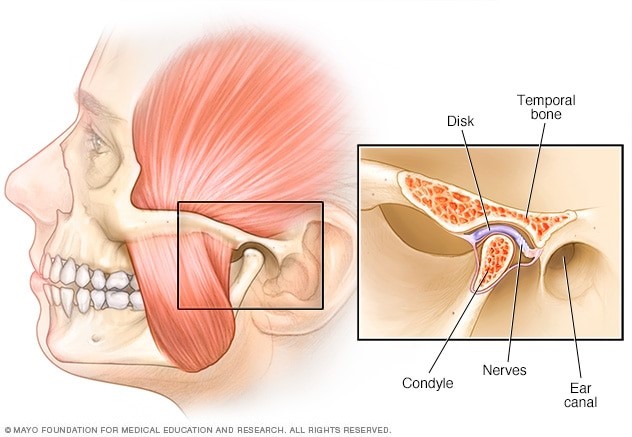
The temporomandibular joint is the most complicated joint in the human body. It includes muscles, nerves, tendons, ligaments, bones and cartilage. The temporomandibular joints have a unique structure which consists of two joints that connect the jawbone (mandible) to the skull (temporal bone) with the tendon and muscle attached to and surrounding the joint and ligaments which connect the two bones. The temporomandibular joints are a bilateral synovial articulation between the temporal bone of the skull above and the mandible below with an articular disk in between which separates the two joints and keeps the movement smooth. The joint acts like a sliding hinge allowing the jaw to move up and down and side to side for speaking, chewing, yawning etc.

Symptoms

The symptoms of TMJ syndrome may include: pain of the jaw, pain in one or both of the temporomandibular joints, aching in and around the ear, difficulty or pain while chewing, locking of the joint, and/or a clicking sound while chewing or moving the jaw.

Causes

The pathophysiology of TMJ syndrome is not fully understood. Researchers believe it is multifactorial and may arise from both local insults as well as systemic disorders. Local insult/injury can cause joint displacement, dislocated jaw, or injury to the condyle and the surrounding tissues due to factors such as inappropriate biting habits and teeth structure. These can cause an internal derangement of the articulating disk and injury to the muscle, tendon, ligament, cartilage, bones and nerves leading to the pain and symptoms associated with TMJ syndrome.

Stress is thought to be a factor in TMJ and it is often linked to the temporomandibular joint. Mental stress during stressful situations or physical stress such as conducting strenuous physical tasks often manifest in ways of clenching or grinding teeth which causes overuse of the temporomandibular joint tissues resulting in tissue inflammation and injury leading to the development and aggravation of TMJ. Anxiety symptoms like tense muscles and jaw clenching can also ultimately cause TMJ.

Systemic disorders such as rheumatoid arthritis (RA) and osteoarthritis can also contribute to TMJ syndrome. These conditions can cause joint cartilage damage which can affect the temporomandibular joint. In osteoarthritis, enzymes such as matrix metalloproteinases (MMPs) are upregulated and break down the cartilage’s collagen network. In RA, the immune system attacks the lining of the joints causing inflammation which can damage cartilage as well as bone tissue.

In summary, risk factors that can increase the chance of developing TMJ syndrome include various types of arthritis, jaw injuries, long-term grinding of teeth, and certain connective tissue disorders that affect the temporomandibular joint.


Login as practitioner to view Wellness Recommendation.

Condition of the Month-June 2019
TMJ Syndrome

Login as practitioner to view Wellness Recommendation.


Temporomandibular joint and muscle disorders (TMJ syndrome) are a group of conditions that cause pain and dysfunction in the jaw joint and the muscles that control jaw movement.


The temporomandibular joint is the most complicated joint in the human body. It includes muscles, nerves, tendons, ligaments, bones and cartilage. The temporomandibular joints have a unique structure which consists of two joints that connect the jawbone (mandible) to the skull (temporal bone) with the tendon and muscle attached to and surrounding the joint and ligaments which connect the two bones. The temporomandibular joints are a bilateral synovial articulation between the temporal bone of the skull above and the mandible below with an articular disk in between which separates the two joints and keeps the movement smooth. The joint acts like a sliding hinge allowing the jaw to move up and down and side to side for speaking, chewing, yawning etc.

Symptoms

The symptoms of TMJ syndrome may include: pain of the jaw, pain in one or both of the temporomandibular joints, aching in and around the ear, difficulty or pain while chewing, locking of the joint, and/or a clicking sound while chewing or moving the jaw.

Causes

The pathophysiology of TMJ syndrome is not fully understood. Researchers believe it is multifactorial and may arise from both local insults as well as systemic disorders. Local insult/injury can cause joint displacement, dislocated jaw, or injury to the condyle and the surrounding tissues due to factors such as inappropriate biting habits and teeth structure. These can cause an internal derangement of the articulating disk and injury to the muscle, tendon, ligament, cartilage, bones and nerves leading to the pain and symptoms associated with TMJ syndrome.

Stress is thought to be a factor in TMJ and it is often linked to the temporomandibular joint. Mental stress during stressful situations or physical stress such as conducting strenuous physical tasks often manifest in ways of clenching or grinding teeth which causes overuse of the temporomandibular joint tissues resulting in tissue inflammation and injury leading to the development and aggravation of TMJ. Anxiety symptoms like tense muscles and jaw clenching can also ultimately cause TMJ.

Systemic disorders such as rheumatoid arthritis (RA) and osteoarthritis can also contribute to TMJ syndrome. These conditions can cause joint cartilage damage which can affect the temporomandibular joint. In osteoarthritis, enzymes such as matrix metalloproteinases (MMPs) are upregulated and break down the cartilage’s collagen network. In RA, the immune system attacks the lining of the joints causing inflammation which can damage cartilage as well as bone tissue.

In summary, risk factors that can increase the chance of developing TMJ syndrome include various types of arthritis, jaw injuries, long-term grinding of teeth, and certain connective tissue disorders that affect the temporomandibular joint.
Login as practitioner to view Wellness Recommendation.


Explore Wei Laboratories