Conditions
Bell’s Palsy Protocol Acid Reflux and GERD Acne Protocol Allergies, Asthma, and Eczema Anemia Ankylosing Spondylitis Protocol Arrhythmia and Afib Protocol Asthma Protocol Atherosclerosis ATP + Attention Deficit Hyperactivity Disorder (ADHD) Atypical Bacterial and Mycobacterial Infections- Respiratory Avascular Necrosis & PS Baker's Cyst Bone Fracture Protocol Bone Spur Bronchiectasis Bulging and Herniated Disc Protocol Bunion Bursitis C. Difficile Cancer Care Candida & Fungal Infections Protocol Cardiovascular Cataracts Protocol Chronic Kidney Disease (CKD) Protocol Cold and Flu Concussion Treatment COPD, Emphysema, and Chronic Bronchitis Protocol Cyst Protocol Cystic Fibrosis Digestive Tract Bacterial and Viral Infections Diverticulitis Dupuytren Contracture Ear Infection & Tinnitus Eczema & Atopic Dermatitis Erectile Dysfunction (ED) Protocol Fatty Liver Disease & Hepatitis Protocol Female Infertility Fibromyalgia Food Allergies and Intolerances Frozen Shoulder & Rotator Cuff Injury Gallbladder Stone Glaucoma & Cataracts Protocol Gout Hair Loss Protocol Hashimoto's Thyroiditis Heart Inflammation Heavy Metal Toxicity Hernia High Blood Pressure Hip Pain Protocol Hyperlipidemia (High Cholesterol) IBD, Ulcerative Colitis, Crohn's Disease IBS Insomnia Kidney Stone Leaky Gut Liver Cirrhosis Long COVID Symptoms Low Testosterone Lupus Lyme Disease Macular Degeneration Male Infertility Men's Health Meniscus and Cartilage Tear Menopause Migraine and Headache Nervous System Viral Infections and Complications Neuropathy OA Customized Treatment Osteoarthritis and Bone-on-Bone Protocol Parasite Infection Protocol Parkinson's Disease PMS, Post Menstrual Syndrome, & Premenstrual Dysphoric Disorder Post-Surgical Wound Healing and Scar Removal Protocol Post-Viral Syndrome Prostate Enlargement Psoriasis and Psoriatic Arthritis Pulmonary Fibrosis & ILD Rheumatoid Arthritis Sarcoidosis Protocol Sinusitis Sinusitis and Nasal Congestion Protocol Skin & Nail Fungal Infections Protocol Sleep Apnea Protocol Sprains and Strains Staph & Strep Infections Stenosis and Bone Spur Stress, Anxiety, Depression Stress, Anxiety, PTSD and Depression Stroke and Post-Stroke Recovery Teeth & Gums Protocol Telomere + Tendinitis Thyroid Disorders Thyroid Disorders Protocol TMJ Syndrome Treatment Sequence Type II Diabetes Urinary Incontinence & Pelvic Organ Prolapse Protocol Uterine Fibroids & Ovarian Cysts UTI Viral Infections Vitiligo Protocol WeiDetox Weight Control Women's Health
Quick Links
Find a Practitioner Practitioner Sign Up Contact Us Subscribe to Monthly Newsletter
Condition
Bell’s Palsy Protocol Acid Reflux and GERD Acne Protocol Allergies, Asthma, and Eczema Anemia Ankylosing Spondylitis Protocol Arrhythmia and Afib Protocol Asthma Protocol Atherosclerosis ATP + Attention Deficit Hyperactivity Disorder (ADHD) Atypical Bacterial and Mycobacterial Infections- Respiratory Avascular Necrosis & PS Baker's Cyst Bone Fracture Protocol Bone Spur Bronchiectasis Bulging and Herniated Disc Protocol Bunion Bursitis C. Difficile Cancer Care Candida & Fungal Infections Protocol Cardiovascular Cataracts Protocol Chronic Kidney Disease (CKD) Protocol Cold and Flu Concussion Treatment COPD, Emphysema, and Chronic Bronchitis Protocol Cyst Protocol Cystic Fibrosis Digestive Tract Bacterial and Viral Infections Diverticulitis Dupuytren Contracture Ear Infection & Tinnitus Eczema & Atopic Dermatitis Erectile Dysfunction (ED) Protocol Fatty Liver Disease & Hepatitis Protocol Female Infertility Fibromyalgia Food Allergies and Intolerances Frozen Shoulder & Rotator Cuff Injury Gallbladder Stone Glaucoma & Cataracts Protocol Gout Hair Loss Protocol Hashimoto's Thyroiditis Heart Inflammation Heavy Metal Toxicity Hernia High Blood Pressure Hip Pain Protocol Hyperlipidemia (High Cholesterol) IBD, Ulcerative Colitis, Crohn's Disease IBS Insomnia Kidney Stone Leaky Gut Liver Cirrhosis Long COVID Symptoms Low Testosterone Lupus Lyme Disease Macular Degeneration Male Infertility Men's Health Meniscus and Cartilage Tear Menopause Migraine and Headache Nervous System Viral Infections and Complications Neuropathy OA Customized Treatment Osteoarthritis and Bone-on-Bone Protocol Parasite Infection Protocol Parkinson's Disease PMS, Post Menstrual Syndrome, & Premenstrual Dysphoric Disorder Post-Surgical Wound Healing and Scar Removal Protocol Post-Viral Syndrome Prostate Enlargement Psoriasis and Psoriatic Arthritis Pulmonary Fibrosis & ILD Rheumatoid Arthritis Sarcoidosis Protocol Sinusitis Sinusitis and Nasal Congestion Protocol Skin & Nail Fungal Infections Protocol Sleep Apnea Protocol Sprains and Strains Staph & Strep Infections Stenosis and Bone Spur Stress, Anxiety, Depression Stress, Anxiety, PTSD and Depression Stroke and Post-Stroke Recovery Teeth & Gums Protocol Telomere + Tendinitis Thyroid Disorders Thyroid Disorders Protocol TMJ Syndrome Treatment Sequence Type II Diabetes Urinary Incontinence & Pelvic Organ Prolapse Protocol Uterine Fibroids & Ovarian Cysts UTI Viral Infections Vitiligo Protocol WeiDetox Weight Control Women's Health
Condition of the Month-April 2020
Insomnia

Login as practitioner to view Wellness Recommendation.


Insomnia is a sleep disorder causing difficulty falling asleep or inability to sleep throughout the night leading to insufficient sleep. Symptoms of insomnia include sleepiness during the day, fatigue, low energy, diminished mental alertness, and issues with concentration. Insomnia can be acute, lasting 1 night to a few weeks, or chronic, lasting 3 nights a week for 3 months or more. There are two main types of insomnia, primary and secondary. Primary insomnia is classified as sleep problems that are not linked to another health condition. Causes of primary insomnia include noise, temperature, or changes in sleep schedule such as jet lag. Secondary insomnia is usually more chronic and is due to a health condition.

Liver Deficiency
In Traditional Chinese Medicine (TCM), imbalances of the inner organs can cause deficiencies which can lead to insomnia. The most common cause of difficulty falling asleep is hepatic insufficiency or liver Yin deficiency in TCM. Important hormones that regulate the sleep-wake cycle are metabolized and cleared by the liver. This includes both melatonin and cortisol. In patients with hepatic insufficiency, melatonin clearance is slow and the levels of melatonin is high during the daytime. This causes the modification of melatonin secretion patterns with the peak of secretion being delayed and therefore the sleep onset is delayed as well.1 Patients may experience bouts of daytime fatigue or drowsiness followed by night-time alertness when the liver finally breaks down the melatonin circulating in the blood.
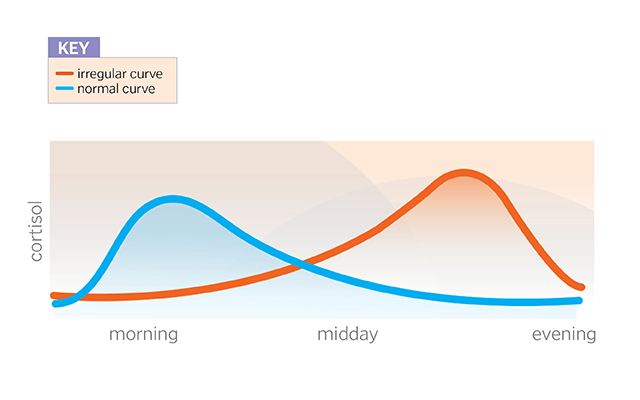
The circadian rhythm of cortisol secretion has a waveform pattern with the nadir for cortisol occurring at about midnight. Low cortisol levels are necessary for falling asleep. Cortisol begins its rapid rise after the first morning awakening and continues for about 60 minutes. This is called the awakening response. Cortisol in the blood is supposed to be cleared by the liver during the day so that its levels are low by nighttime. Elevated cortisol levels at night can cause difficulty falling asleep. Stress, diet, and obesity can upset the liver leading to a liver deficiency. Poor liver function from a liver deficiency due to stress and anxiety can compromise the cortisol clearance and lead to an increase in cortisol levels in the body. Chronic stress or anxiety can continually overwhelm the liver leading to excess cortisol staying in the bloodstream for longer, making it difficult to fall asleep, causing chronic insomnia.

Stress can also deplete the liver’s storage of glycogen. Eventually, the liver becomes fatigued from producing abnormal amounts of glycogen which leads to high blood sugar levels, upsetting the sleep pattern. Diet can also affect the liver since it is the organ that breaks down fats. If the liver is deficient, it can’t break down fats properly which can lead to digestion issues such as diarrhea or constipation, both of which can affect your sleep pattern. Unfortunately, sleep deprivation can also impact digestion, so a vicious cycle can occur.

On top of the insomnia symptoms, a liver Yin deficiency also includes symptoms of irritability, timidity, and frequent fearful awakening. A common symptom among liver cirrhosis patients includes difficulty falling asleep. Many studies have been done and recent findings indicate that delayed sleep onset and circadian variations may also have to do with the core body temperature.1 Heat loss through vasodilation is essential for sleep onset. Cirrhotic patients are unable to decrease their distal temperatures at the end of the day leading to impaired sleep.1 Although serious health conditions such as fatty liver disease and cirrhosis are linked to sleep disturbances, minor upsets can also bring about a noticeable change in sleep patterns.

Heart Qi and Kidney Yin Deficiency
The heart and kidneys are aligned in TCM. The heart is a fire organ in TMC while the kidneys represent water in TCM. The theory comes from the idea that water ascends while fire descends. Harmony between the heart and kidney comes from this dynamic relationship of descending and ascending movement of Yin and Yang in the heart and kidney. The heart Yang Qi descends to strengthen the kidneys while the kidney ascends to help the heart Yin fluid, to prevent heart Heat. If the heart-kidney balance is disturbed, it can cause a condition called “Xin Shen Bu Jiao” in TCM, which means the heart and kidney are disconnected. This can lead to arrhythmia with symptoms including dream-disturbed sleep, night sweats, and insomnia.

Kidney Yang Deficiency
Kidney disorders due to Kidney Yang deficiency have been associated with a variety of sleep-related conditions. The most common problem caused by poor kidney function is trouble staying asleep. Patients usually experience difficulty falling back to sleep after waking up during the night. Kidney dysfunction strongly affects physiological functions that can cause disturbances in normal homeostasis, therefore, affecting sleep. Ineffective glomerular filtration leads to an inability to maintain homeostasis with respect to various metabolic products such as bioelements and proteins.

Brain Heat
The initiation of sleep occurs when HPA axis activity is lowest, and sleep deprivation is associated with HPA activation. Chemical imbalances in the brain can also cause insomnia. A recent study was performed on individuals with chronic insomnia that described the brains of individuals with chronic insomnia have lower levels of GABA, an inhibitory transmitter in the brain. If levels of GABA are low, then individuals have a hard time “shutting off” their brains at night time. An overactive mind is a key feature of psychophysiological insomnia. Patients who suffer from Brain Heat also typically have symptoms of restless leg syndrome and numbness in certain parts of the body.

Heart Heat
Heart Heat or Heat Fire can cause restricted blood circulation to the extremities including the brain affecting sleep and causing insomnia. Initiation of sleep also requires that the HPA axis activity must be at its lowest. Heart Heat can also trigger liver yang rising and cause heart-mind restlessness syndrome which leads to HPA axis hyperactivity and insomnia.

References:

  1. Bruyneel, Marie, and Thomas Sersté. “Sleep disturbances in patients with liver cirrhosis: prevalence, impact, and management challenges.” Nature and science of sleep vol. 10 369-375. 2 Nov. 2018, doi:10.2147/NSS.S186665
  2. Mancini, E., Beglinger, C., Drewe, J., Zanchi, D., Lang, U. E., & Borgwardt, S. (2017). Green tea effects on cognition, mood and human brain function: A systematic review. Phytomedicine, 34, 26–37. doi: 10.1016/j.phymed.2017.07.008


Login as practitioner to view Wellness Recommendation.

Condition of the Month-April 2020
Insomnia

Login as practitioner to view Wellness Recommendation.


Insomnia is a sleep disorder causing difficulty falling asleep or inability to sleep throughout the night leading to insufficient sleep. Symptoms of insomnia include sleepiness during the day, fatigue, low energy, diminished mental alertness, and issues with concentration. Insomnia can be acute, lasting 1 night to a few weeks, or chronic, lasting 3 nights a week for 3 months or more. There are two main types of insomnia, primary and secondary. Primary insomnia is classified as sleep problems that are not linked to another health condition. Causes of primary insomnia include noise, temperature, or changes in sleep schedule such as jet lag. Secondary insomnia is usually more chronic and is due to a health condition.

Liver Deficiency
In Traditional Chinese Medicine (TCM), imbalances of the inner organs can cause deficiencies which can lead to insomnia. The most common cause of difficulty falling asleep is hepatic insufficiency or liver Yin deficiency in TCM. Important hormones that regulate the sleep-wake cycle are metabolized and cleared by the liver. This includes both melatonin and cortisol. In patients with hepatic insufficiency, melatonin clearance is slow and the levels of melatonin is high during the daytime. This causes the modification of melatonin secretion patterns with the peak of secretion being delayed and therefore the sleep onset is delayed as well.1 Patients may experience bouts of daytime fatigue or drowsiness followed by night-time alertness when the liver finally breaks down the melatonin circulating in the blood.

The circadian rhythm of cortisol secretion has a waveform pattern with the nadir for cortisol occurring at about midnight. Low cortisol levels are necessary for falling asleep. Cortisol begins its rapid rise after the first morning awakening and continues for about 60 minutes. This is called the awakening response. Cortisol in the blood is supposed to be cleared by the liver during the day so that its levels are low by nighttime. Elevated cortisol levels at night can cause difficulty falling asleep. Stress, diet, and obesity can upset the liver leading to a liver deficiency. Poor liver function from a liver deficiency due to stress and anxiety can compromise the cortisol clearance and lead to an increase in cortisol levels in the body. Chronic stress or anxiety can continually overwhelm the liver leading to excess cortisol staying in the bloodstream for longer, making it difficult to fall asleep, causing chronic insomnia.

Stress can also deplete the liver’s storage of glycogen. Eventually, the liver becomes fatigued from producing abnormal amounts of glycogen which leads to high blood sugar levels, upsetting the sleep pattern. Diet can also affect the liver since it is the organ that breaks down fats. If the liver is deficient, it can’t break down fats properly which can lead to digestion issues such as diarrhea or constipation, both of which can affect your sleep pattern. Unfortunately, sleep deprivation can also impact digestion, so a vicious cycle can occur.

On top of the insomnia symptoms, a liver Yin deficiency also includes symptoms of irritability, timidity, and frequent fearful awakening. A common symptom among liver cirrhosis patients includes difficulty falling asleep. Many studies have been done and recent findings indicate that delayed sleep onset and circadian variations may also have to do with the core body temperature.1 Heat loss through vasodilation is essential for sleep onset. Cirrhotic patients are unable to decrease their distal temperatures at the end of the day leading to impaired sleep.1 Although serious health conditions such as fatty liver disease and cirrhosis are linked to sleep disturbances, minor upsets can also bring about a noticeable change in sleep patterns.

Heart Qi and Kidney Yin Deficiency
The heart and kidneys are aligned in TCM. The heart is a fire organ in TMC while the kidneys represent water in TCM. The theory comes from the idea that water ascends while fire descends. Harmony between the heart and kidney comes from this dynamic relationship of descending and ascending movement of Yin and Yang in the heart and kidney. The heart Yang Qi descends to strengthen the kidneys while the kidney ascends to help the heart Yin fluid, to prevent heart Heat. If the heart-kidney balance is disturbed, it can cause a condition called “Xin Shen Bu Jiao” in TCM, which means the heart and kidney are disconnected. This can lead to arrhythmia with symptoms including dream-disturbed sleep, night sweats, and insomnia.

Kidney Yang Deficiency
Kidney disorders due to Kidney Yang deficiency have been associated with a variety of sleep-related conditions. The most common problem caused by poor kidney function is trouble staying asleep. Patients usually experience difficulty falling back to sleep after waking up during the night. Kidney dysfunction strongly affects physiological functions that can cause disturbances in normal homeostasis, therefore, affecting sleep. Ineffective glomerular filtration leads to an inability to maintain homeostasis with respect to various metabolic products such as bioelements and proteins.

Brain Heat
The initiation of sleep occurs when HPA axis activity is lowest, and sleep deprivation is associated with HPA activation. Chemical imbalances in the brain can also cause insomnia. A recent study was performed on individuals with chronic insomnia that described the brains of individuals with chronic insomnia have lower levels of GABA, an inhibitory transmitter in the brain. If levels of GABA are low, then individuals have a hard time “shutting off” their brains at night time. An overactive mind is a key feature of psychophysiological insomnia. Patients who suffer from Brain Heat also typically have symptoms of restless leg syndrome and numbness in certain parts of the body.

Heart Heat
Heart Heat or Heat Fire can cause restricted blood circulation to the extremities including the brain affecting sleep and causing insomnia. Initiation of sleep also requires that the HPA axis activity must be at its lowest. Heart Heat can also trigger liver yang rising and cause heart-mind restlessness syndrome which leads to HPA axis hyperactivity and insomnia.

References:

  1. Bruyneel, Marie, and Thomas Sersté. “Sleep disturbances in patients with liver cirrhosis: prevalence, impact, and management challenges.” Nature and science of sleep vol. 10 369-375. 2 Nov. 2018, doi:10.2147/NSS.S186665
  2. Mancini, E., Beglinger, C., Drewe, J., Zanchi, D., Lang, U. E., & Borgwardt, S. (2017). Green tea effects on cognition, mood and human brain function: A systematic review. Phytomedicine, 34, 26–37. doi: 10.1016/j.phymed.2017.07.008

Login as practitioner to view Wellness Recommendation.


Explore Wei Laboratories