Conditions
Bell’s Palsy Protocol Acid Reflux and GERD Acne Protocol Allergies, Asthma, and Eczema Anemia Ankylosing Spondylitis Protocol Arrhythmia and Afib Protocol Asthma Protocol Atherosclerosis ATP + Attention Deficit Hyperactivity Disorder (ADHD) Atypical Bacterial and Mycobacterial Infections- Respiratory Avascular Necrosis & PS Baker's Cyst Bone Fracture Protocol Bone Spur Bronchiectasis Bulging and Herniated Disc Protocol Bunion Bursitis C. Difficile Cancer Care Candida & Fungal Infections Protocol Cardiovascular Cataracts Protocol Chronic Kidney Disease (CKD) Protocol Cold and Flu Concussion Treatment COPD, Emphysema, and Chronic Bronchitis Protocol Cyst Protocol Cystic Fibrosis Digestive Tract Bacterial and Viral Infections Diverticulitis Dupuytren Contracture Ear Infection & Tinnitus Eczema & Atopic Dermatitis Erectile Dysfunction (ED) Protocol Fatty Liver Disease & Hepatitis Protocol Female Infertility Fibromyalgia Food Allergies and Intolerances Frozen Shoulder & Rotator Cuff Injury Gallbladder Stone Glaucoma & Cataracts Protocol Gout Hair Loss Protocol Hashimoto's Thyroiditis Heart Inflammation Heavy Metal Toxicity Hernia High Blood Pressure Hip Pain Protocol Hyperlipidemia (High Cholesterol) IBD, Ulcerative Colitis, Crohn's Disease IBS Insomnia Kidney Stone Leaky Gut Liver Cirrhosis Long COVID Symptoms Low Testosterone Lupus Lyme Disease Macular Degeneration Male Infertility Men's Health Meniscus and Cartilage Tear Menopause Migraine and Headache Nervous System Viral Infections and Complications Neuropathy OA Customized Treatment Osteoarthritis and Bone-on-Bone Protocol Parasite Infection Protocol Parkinson's Disease PMS, Post Menstrual Syndrome, & Premenstrual Dysphoric Disorder Post-Surgical Wound Healing and Scar Removal Protocol Post-Viral Syndrome Prostate Enlargement Psoriasis and Psoriatic Arthritis Pulmonary Fibrosis & ILD Rheumatoid Arthritis Sarcoidosis Protocol Sinusitis Sinusitis and Nasal Congestion Protocol Skin & Nail Fungal Infections Protocol Sleep Apnea Protocol Sprains and Strains Staph & Strep Infections Stenosis and Bone Spur Stress, Anxiety, Depression Stress, Anxiety, PTSD and Depression Stroke and Post-Stroke Recovery Teeth & Gums Protocol Telomere + Tendinitis Thyroid Disorders Thyroid Disorders Protocol TMJ Syndrome Treatment Sequence Type II Diabetes Urinary Incontinence & Pelvic Organ Prolapse Protocol Uterine Fibroids & Ovarian Cysts UTI Viral Infections Vitiligo Protocol WeiDetox Weight Control Women's Health
Quick Links
Find a Practitioner Practitioner Sign Up Contact Us Subscribe to Monthly Newsletter
Condition
Bell’s Palsy Protocol Acid Reflux and GERD Acne Protocol Allergies, Asthma, and Eczema Anemia Ankylosing Spondylitis Protocol Arrhythmia and Afib Protocol Asthma Protocol Atherosclerosis ATP + Attention Deficit Hyperactivity Disorder (ADHD) Atypical Bacterial and Mycobacterial Infections- Respiratory Avascular Necrosis & PS Baker's Cyst Bone Fracture Protocol Bone Spur Bronchiectasis Bulging and Herniated Disc Protocol Bunion Bursitis C. Difficile Cancer Care Candida & Fungal Infections Protocol Cardiovascular Cataracts Protocol Chronic Kidney Disease (CKD) Protocol Cold and Flu Concussion Treatment COPD, Emphysema, and Chronic Bronchitis Protocol Cyst Protocol Cystic Fibrosis Digestive Tract Bacterial and Viral Infections Diverticulitis Dupuytren Contracture Ear Infection & Tinnitus Eczema & Atopic Dermatitis Erectile Dysfunction (ED) Protocol Fatty Liver Disease & Hepatitis Protocol Female Infertility Fibromyalgia Food Allergies and Intolerances Frozen Shoulder & Rotator Cuff Injury Gallbladder Stone Glaucoma & Cataracts Protocol Gout Hair Loss Protocol Hashimoto's Thyroiditis Heart Inflammation Heavy Metal Toxicity Hernia High Blood Pressure Hip Pain Protocol Hyperlipidemia (High Cholesterol) IBD, Ulcerative Colitis, Crohn's Disease IBS Insomnia Kidney Stone Leaky Gut Liver Cirrhosis Long COVID Symptoms Low Testosterone Lupus Lyme Disease Macular Degeneration Male Infertility Men's Health Meniscus and Cartilage Tear Menopause Migraine and Headache Nervous System Viral Infections and Complications Neuropathy OA Customized Treatment Osteoarthritis and Bone-on-Bone Protocol Parasite Infection Protocol Parkinson's Disease PMS, Post Menstrual Syndrome, & Premenstrual Dysphoric Disorder Post-Surgical Wound Healing and Scar Removal Protocol Post-Viral Syndrome Prostate Enlargement Psoriasis and Psoriatic Arthritis Pulmonary Fibrosis & ILD Rheumatoid Arthritis Sarcoidosis Protocol Sinusitis Sinusitis and Nasal Congestion Protocol Skin & Nail Fungal Infections Protocol Sleep Apnea Protocol Sprains and Strains Staph & Strep Infections Stenosis and Bone Spur Stress, Anxiety, Depression Stress, Anxiety, PTSD and Depression Stroke and Post-Stroke Recovery Teeth & Gums Protocol Telomere + Tendinitis Thyroid Disorders Thyroid Disorders Protocol TMJ Syndrome Treatment Sequence Type II Diabetes Urinary Incontinence & Pelvic Organ Prolapse Protocol Uterine Fibroids & Ovarian Cysts UTI Viral Infections Vitiligo Protocol WeiDetox Weight Control Women's Health
Condition of the Month-July 2019
Prostate Enlargement

Login as practitioner to view Wellness Recommendation.


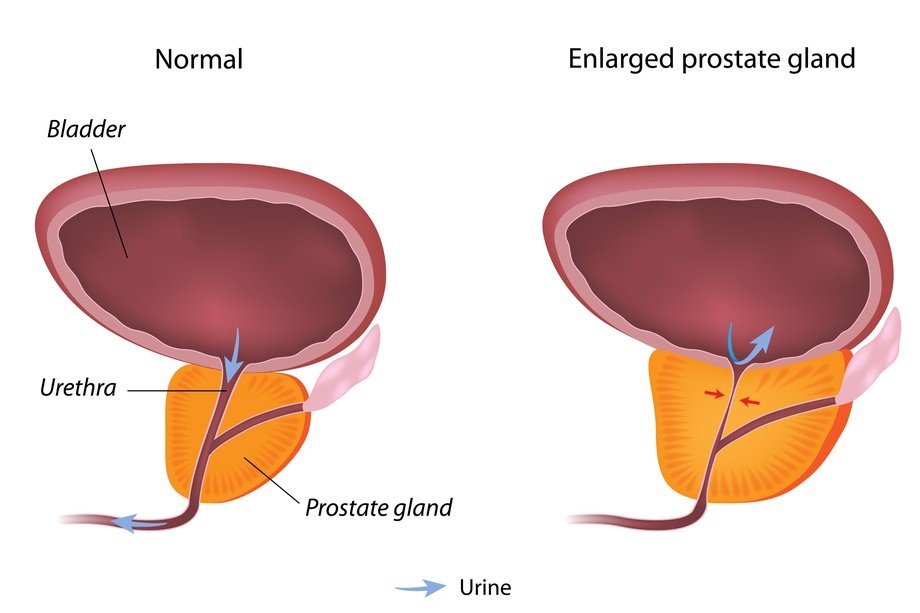
Prostate enlargement, known as benign prostatic hyperplasia (BPH), is a condition in which the prostate gland becomes enlarged and can cause uncomfortable urinary symptoms. BPH is mainly caused by the proliferation of smooth muscle and epithelial cells located in the prostate. The prostate is located beneath the bladder and the urethra passes through the center of the prostate. Most males have continued prostate growth throughout life. As the prostate enlarges, the gland presses against the urethra leading to urinary issues.


The symptoms of BPH include urinary frequency, urinary urgency, an interrupted and weak urine stream, nocturia, urinary retention, and pain after ejaculation or urination. These symptoms arise from a blocked urethra and/or a bladder that is overworked.

Although the etiology of BPH is unknown, testosterone and dihydrotestosterone (DHT) are well-known to be related to the development of BPH. As men age, the amount of active testosterone in the blood decreases. Serum testosterone has been shown to decrease in men with age by approximately 2%–3% annually. Testosterone is produced in the testes and then spreads to the prostate where it is converted into dihydrotestosterone (DHT) through an enzyme, 5α-reductase (5AR). DHT is an endogenous androgen sex hormone responsible for prostate development. While testosterone decreases with age, the activities of 5AR and androgen receptors (AR) are increased due to androgen balance.1 In BPH patients, shared common features consist of proliferated prostate cells and increased DHT, AR, and PSA levels. High concentrations of DHT enhance prostate specific antigen (PSA) levels by binding with the androgen receptors. PSA levels increase when the prostate is inflamed and is how prostate inflammation is monitored through blood tests.
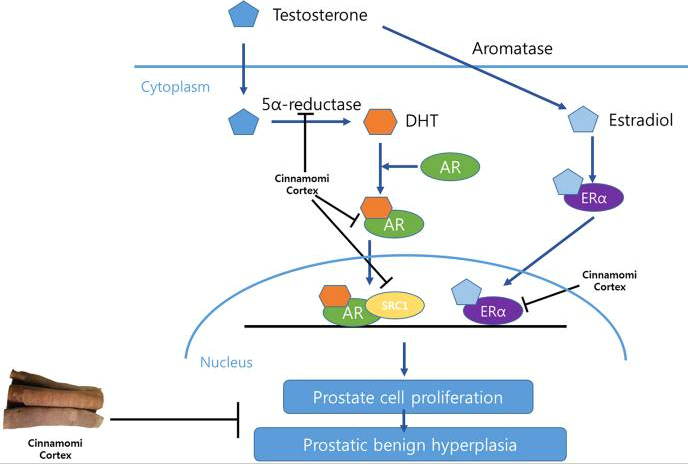


Estrogen is also found in the prostate and can contribute to the development of BPH. Estrogen receptors such as estrogen receptor-α (ERα), within the prostate, can mediates cell proliferation, whereas, estrogen receptor-ß (ERß) mediate apoptosis (programmed cell death).1 Aromatase is located in estrogen-producing cells in the testes and is involved in the production of estrogen by converting testosterone to estradiol. Estradiol binds with ERα where it enters into the nucleus and acts as a transcription factor which results in proliferation of the prostate cells.1

Kidney and bladder damage and infection can occur and cause urinary tract inflammation in BPH patients due to the interruption in urine flow and urine retention. The urinary tract inflammation can further affect the prostate and aggravated prostate inflammation causing further increase of the PSA levels.

References:

1. Choi HM, Jung Y, Park J, et al. Cinnamomi Cortex (Cinnamomum verum) Suppresses Testosterone-induced Benign Prostatic Hyperplasia by Regulating 5α-reductase. Sci Rep. 2016;6:31906. Published 2016 Aug 23. doi:10.1038/srep31906


Login as practitioner to view Wellness Recommendation.

Condition of the Month-July 2019
Prostate Enlargement

Login as practitioner to view Wellness Recommendation.


Prostate enlargement, known as benign prostatic hyperplasia (BPH), is a condition in which the prostate gland becomes enlarged and can cause uncomfortable urinary symptoms. BPH is mainly caused by the proliferation of smooth muscle and epithelial cells located in the prostate. The prostate is located beneath the bladder and the urethra passes through the center of the prostate. Most males have continued prostate growth throughout life. As the prostate enlarges, the gland presses against the urethra leading to urinary issues.


The symptoms of BPH include urinary frequency, urinary urgency, an interrupted and weak urine stream, nocturia, urinary retention, and pain after ejaculation or urination. These symptoms arise from a blocked urethra and/or a bladder that is overworked.

Although the etiology of BPH is unknown, testosterone and dihydrotestosterone (DHT) are well-known to be related to the development of BPH. As men age, the amount of active testosterone in the blood decreases. Serum testosterone has been shown to decrease in men with age by approximately 2%–3% annually. Testosterone is produced in the testes and then spreads to the prostate where it is converted into dihydrotestosterone (DHT) through an enzyme, 5α-reductase (5AR). DHT is an endogenous androgen sex hormone responsible for prostate development. While testosterone decreases with age, the activities of 5AR and androgen receptors (AR) are increased due to androgen balance.1 In BPH patients, shared common features consist of proliferated prostate cells and increased DHT, AR, and PSA levels. High concentrations of DHT enhance prostate specific antigen (PSA) levels by binding with the androgen receptors. PSA levels increase when the prostate is inflamed and is how prostate inflammation is monitored through blood tests.


Estrogen is also found in the prostate and can contribute to the development of BPH. Estrogen receptors such as estrogen receptor-α (ERα), within the prostate, can mediates cell proliferation, whereas, estrogen receptor-ß (ERß) mediate apoptosis (programmed cell death).1 Aromatase is located in estrogen-producing cells in the testes and is involved in the production of estrogen by converting testosterone to estradiol. Estradiol binds with ERα where it enters into the nucleus and acts as a transcription factor which results in proliferation of the prostate cells.1

Kidney and bladder damage and infection can occur and cause urinary tract inflammation in BPH patients due to the interruption in urine flow and urine retention. The urinary tract inflammation can further affect the prostate and aggravated prostate inflammation causing further increase of the PSA levels.

References:

1. Choi HM, Jung Y, Park J, et al. Cinnamomi Cortex (Cinnamomum verum) Suppresses Testosterone-induced Benign Prostatic Hyperplasia by Regulating 5α-reductase. Sci Rep. 2016;6:31906. Published 2016 Aug 23. doi:10.1038/srep31906
Login as practitioner to view Wellness Recommendation.


Explore Wei Laboratories