Conditions
Bell’s Palsy Protocol Acid Reflux and GERD Acne Protocol Allergies, Asthma, and Eczema Anemia Ankylosing Spondylitis Protocol Arrhythmia and Afib Protocol Asthma Protocol Atherosclerosis ATP + Attention Deficit Hyperactivity Disorder (ADHD) Atypical Bacterial and Mycobacterial Infections- Respiratory Avascular Necrosis & PS Baker's Cyst Bone Fracture Protocol Bone Spur Bronchiectasis Bulging and Herniated Disc Protocol Bunion Bursitis C. Difficile Cancer Care Candida & Fungal Infections Protocol Cardiovascular Cataracts Protocol Chronic Kidney Disease (CKD) Protocol Cold and Flu Concussion Treatment COPD, Emphysema, and Chronic Bronchitis Protocol Cyst Protocol Cystic Fibrosis Digestive Tract Bacterial and Viral Infections Diverticulitis Dupuytren Contracture Ear Infection & Tinnitus Eczema & Atopic Dermatitis Erectile Dysfunction (ED) Protocol Fatty Liver Disease & Hepatitis Protocol Female Infertility Fibromyalgia Food Allergies and Intolerances Frozen Shoulder & Rotator Cuff Injury Gallbladder Stone Glaucoma & Cataracts Protocol Gout Hair Loss Protocol Hashimoto's Thyroiditis Heart Inflammation Heavy Metal Toxicity Hernia High Blood Pressure Hip Pain Protocol Hyperlipidemia (High Cholesterol) IBD, Ulcerative Colitis, Crohn's Disease IBS Insomnia Kidney Stone Leaky Gut Liver Cirrhosis Long COVID Symptoms Low Testosterone Lupus Lyme Disease Macular Degeneration Male Infertility Men's Health Meniscus and Cartilage Tear Menopause Migraine and Headache Nervous System Viral Infections and Complications Neuropathy OA Customized Treatment Osteoarthritis and Bone-on-Bone Protocol Parasite Infection Protocol Parkinson's Disease PMS, Post Menstrual Syndrome, & Premenstrual Dysphoric Disorder Post-Surgical Wound Healing and Scar Removal Protocol Post-Viral Syndrome Prostate Enlargement Psoriasis and Psoriatic Arthritis Pulmonary Fibrosis & ILD Rheumatoid Arthritis Sarcoidosis Protocol Sinusitis Sinusitis and Nasal Congestion Protocol Skin & Nail Fungal Infections Protocol Sleep Apnea Protocol Sprains and Strains Staph & Strep Infections Stenosis and Bone Spur Stress, Anxiety, Depression Stress, Anxiety, PTSD and Depression Stroke and Post-Stroke Recovery Teeth & Gums Protocol Telomere + Tendinitis Thyroid Disorders Thyroid Disorders Protocol TMJ Syndrome Treatment Sequence Type II Diabetes Urinary Incontinence & Pelvic Organ Prolapse Protocol Uterine Fibroids & Ovarian Cysts UTI Viral Infections Vitiligo Protocol WeiDetox Weight Control Women's Health
Quick Links
Find a Practitioner Practitioner Sign Up Contact Us Subscribe to Monthly Newsletter
Condition
Bell’s Palsy Protocol Acid Reflux and GERD Acne Protocol Allergies, Asthma, and Eczema Anemia Ankylosing Spondylitis Protocol Arrhythmia and Afib Protocol Asthma Protocol Atherosclerosis ATP + Attention Deficit Hyperactivity Disorder (ADHD) Atypical Bacterial and Mycobacterial Infections- Respiratory Avascular Necrosis & PS Baker's Cyst Bone Fracture Protocol Bone Spur Bronchiectasis Bulging and Herniated Disc Protocol Bunion Bursitis C. Difficile Cancer Care Candida & Fungal Infections Protocol Cardiovascular Cataracts Protocol Chronic Kidney Disease (CKD) Protocol Cold and Flu Concussion Treatment COPD, Emphysema, and Chronic Bronchitis Protocol Cyst Protocol Cystic Fibrosis Digestive Tract Bacterial and Viral Infections Diverticulitis Dupuytren Contracture Ear Infection & Tinnitus Eczema & Atopic Dermatitis Erectile Dysfunction (ED) Protocol Fatty Liver Disease & Hepatitis Protocol Female Infertility Fibromyalgia Food Allergies and Intolerances Frozen Shoulder & Rotator Cuff Injury Gallbladder Stone Glaucoma & Cataracts Protocol Gout Hair Loss Protocol Hashimoto's Thyroiditis Heart Inflammation Heavy Metal Toxicity Hernia High Blood Pressure Hip Pain Protocol Hyperlipidemia (High Cholesterol) IBD, Ulcerative Colitis, Crohn's Disease IBS Insomnia Kidney Stone Leaky Gut Liver Cirrhosis Long COVID Symptoms Low Testosterone Lupus Lyme Disease Macular Degeneration Male Infertility Men's Health Meniscus and Cartilage Tear Menopause Migraine and Headache Nervous System Viral Infections and Complications Neuropathy OA Customized Treatment Osteoarthritis and Bone-on-Bone Protocol Parasite Infection Protocol Parkinson's Disease PMS, Post Menstrual Syndrome, & Premenstrual Dysphoric Disorder Post-Surgical Wound Healing and Scar Removal Protocol Post-Viral Syndrome Prostate Enlargement Psoriasis and Psoriatic Arthritis Pulmonary Fibrosis & ILD Rheumatoid Arthritis Sarcoidosis Protocol Sinusitis Sinusitis and Nasal Congestion Protocol Skin & Nail Fungal Infections Protocol Sleep Apnea Protocol Sprains and Strains Staph & Strep Infections Stenosis and Bone Spur Stress, Anxiety, Depression Stress, Anxiety, PTSD and Depression Stroke and Post-Stroke Recovery Teeth & Gums Protocol Telomere + Tendinitis Thyroid Disorders Thyroid Disorders Protocol TMJ Syndrome Treatment Sequence Type II Diabetes Urinary Incontinence & Pelvic Organ Prolapse Protocol Uterine Fibroids & Ovarian Cysts UTI Viral Infections Vitiligo Protocol WeiDetox Weight Control Women's Health
Condition of the Month-November 2021
Heart Inflammation

Login as practitioner to view Wellness Recommendation.


There are three main types of heart inflammation which include endocarditis, myocarditis, and pericarditis. Endocarditis is inflammation of the inner lining of the heart's chambers and valves. Myocarditis is inflammation of the heart muscle. Pericarditis is inflammation of the tissue that forms a sac around the heart. In all three cases, the body's immune system causes inflammation in response to an infection or some other trigger.

Myocarditis, Endocarditis, and Pericarditis

3.1 million cases of myocarditis were diagnosed in 2017. Acute myocarditis mostly does not respond to symptomatic medication for heart failure, and mortality is high in spite of treatment. The long-term disease course depends on the pathogen, the extent and type of inflammation, and the initial injury to the myocardium. Myocarditis has been reported to be a major cause of sudden and unexpected death in infants, adolescents, and young adults. There are many undiagnosed cases of COVID-19 myocarditis, especially in young adults.

Myocarditis is the inflammation of the myocardium that affects the heart muscles and the electrical system, reducing the heart’s ability to pump, causing abnormal heart rhythms. Inflammatory infiltrates such as lymphocytes, neutrophils, eosinophils, and granulomas have all been identified in these patients. Along with inflammation, there is also necrosis of cardiac myocyte cells. The cause of myocarditis is usually due to a viral infection such as adenovirus (common cold), coronavirus (COVID-19) Coxsackie B viruses, enteroviruses, Epstein-Barr virus (EBV), hepatitis B and C, parvovirus, and herpes simplex virus. Although viruses are the most common cause, myocarditis can also occur due to other types of infections such as a bacterial infection, parasites, or fungal infection. Pathophysiology remains a subject of research but the potential mechanism is that these infectious agents could cause direct cardiomyocyte injury. Chronic myocarditis can cause dilated cardiomyopathy, or an enlarged heart which leads to heart failure. Symptoms can vary and some patients may not exhibit any symptoms while others may experience heart murmur, premature heartbeat, shortness of breath, chest pain or tightness, flu-like symptom and poor sleep. Chronic inflammation of the heart can cause scar tissue formation in myocardium as well as in the sinus node and arteries causing angina, chest pain and heaviness, arrhythmia and A-fib as well as breath shortness. The condition eventually will lead to congestive heart failure. Symptoms of heart failure include fatigue, dyspnea, and edema of the legs and feet.

Endocarditis is the inflammation of the inner lining of the heart chambers and valves, the endocardium. It is usually caused by an infection from pathogenic microorganisms other than viruses that lodge in the heart valves and infect the endocardium. Such microorganisms include bacteria, fungi, and intracellular parasites. These types of pathogenic microorganisms typically spread from the mouth or another part of the body and enter into the bloodstream where they travel to and attach to abnormal or damaged valves or tissues of the heart.

Deformity of the heart valves due to rheumatic heart disease, mitral valve prolapses, and aortic stenosis with uneven surfaces increases the risk greatly because the germs can adhere to the uneven surface more easily. The heart valves are made of cartilage and do not have a blood supply and therefore have poor protection from the immune system rendering them vulnerable to all kinds of infections.

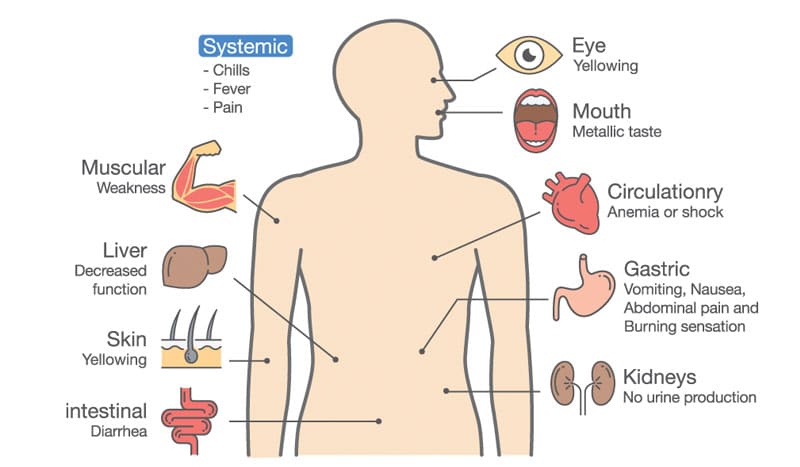
Depending on the virulence of the microorganism, the manifested symptoms usually cover a wide range of symptoms and aren’t always severe. Symptoms may develop slowly over time. In the early stages, the symptoms are similar to many other illnesses including the flu or general infections such as pneumonia and many cases go undiagnosed. In acute cases, patients may experience symptoms that appear suddenly including pale skin, fever, chills, night sweats, muscle or joint pain, nausea, decreased appetite, full or pressure feeling in the upper-left part of the stomach. In severe cases, symptoms include swollen feet and legs, shortness of breath, cough, heart murmur, blood in the urine, and broken blood vessels that appear as red spots on the chest or on the whites of the eyes.

Chronic heart inflammation can also affect the lymph drainage system of the heart causing accumulation of waste toxins and reduced heart function. Patients may experience symptoms of heart murmur, chest pain and tightness, dizziness, exhaustion and laziness to talk.

Pericarditis refers to the inflammation of the two thin layers of a sac-like tissue that surround the heart, called the pericardium. The pericardium, separated from the heart by a small amount of fluid, holds the heart in place and helps with heart function. In pericarditis, the inflammation can cause the tissue to rub up against the heart which causes chest pain, a common symptom. Pericarditis can be either acute or chronic and can be caused by viral, bacterial, or fungal infections. In reoccurring pericarditis cases, it is usually the result of an autoimmune condition that causes systemic inflammation such as lupus or rheumatoid arthritis.

Other health disorders can also cause pericarditis such as kidney failure or other chronic heart conditions. In these cases, pericardial effusions can occur in which there is a gradual or sudden increase of fluid accumulation in the pericardial sac. The amount of liquid can increase from 30-50mL to as large as 1000mL. Fluid accumulation can cause symptoms of chest pain and heaviness, lightheadedness, heart palpitations, difficulty breathing when lying down, coughing, and fatigue.

Chronic pericardial inflammation can cause scar tissue formation as well as degeneration with a loss of elasticity of the pericardial sac. This can cause the attenuation of the heart contraction resulting in reduced cardiac output. Patients may experience symptoms of chest tightness, difficulty breathing, cold sweat, irritability and insomnia.

Heart Inflammation and COVID-19

A growing number of studies suggest many COVID-19 survivors experience some type of heart damage, even if they didn't have underlying heart disease and weren't sick enough to be hospitalized.

Nearly one-fourth of those hospitalized with COVID-19 have been diagnosed with cardiovascular complications, which have been shown to contribute to roughly 40% of all COVID-19-related deaths.1 Dr. Gregg Fonarow, chief of the division of cardiology at the University of California, Los Angeles has commented that “there is recognition that even some of those COVID-19 patients not hospitalized are experiencing cardiac injury.1 This raises concerns that there may be individuals who get through the initial infection, but are left with cardiovascular damage and complications."

Another JAMA Cardiology study used cardiac MRIs on 100 people who had recovered from COVID-19 within the past two to three months. Researchers found abnormalities in the hearts of 78% of recovered patients and "ongoing myocardial inflammation" in 60%.2 The same study found high levels of the blood enzyme troponin, an indicator of heart damage, in 76% of patients tested, although heart function appeared to be generally preserved. Most patients in the study had not required hospitalization.2

Heart inflammation triggered by COVID-19 vaccines has also been a concern, especially in younger people. In the past few months, some cases of myocarditis, have been recorded following the use of the Pfizer and Moderna vaccines.3 This has prompted concern particularly in the US and Israel, as these two countries have led the way in vaccinating younger people. The reaction happens most often in men and boys aged under 30 after their second dose, and is usually seen within 10 days.3 Although the cause is unknown, animal studies have found testosterone may led to the inflammation. This type of myocarditis is acute and typically leads to damage to the myocardial cells.


Login as practitioner to view Wellness Recommendation.

Condition of the Month-November 2021
Heart Inflammation

Login as practitioner to view Wellness Recommendation.


There are three main types of heart inflammation which include endocarditis, myocarditis, and pericarditis. Endocarditis is inflammation of the inner lining of the heart's chambers and valves. Myocarditis is inflammation of the heart muscle. Pericarditis is inflammation of the tissue that forms a sac around the heart. In all three cases, the body's immune system causes inflammation in response to an infection or some other trigger.

Myocarditis, Endocarditis, and Pericarditis

3.1 million cases of myocarditis were diagnosed in 2017. Acute myocarditis mostly does not respond to symptomatic medication for heart failure, and mortality is high in spite of treatment. The long-term disease course depends on the pathogen, the extent and type of inflammation, and the initial injury to the myocardium. Myocarditis has been reported to be a major cause of sudden and unexpected death in infants, adolescents, and young adults. There are many undiagnosed cases of COVID-19 myocarditis, especially in young adults.

Myocarditis is the inflammation of the myocardium that affects the heart muscles and the electrical system, reducing the heart’s ability to pump, causing abnormal heart rhythms. Inflammatory infiltrates such as lymphocytes, neutrophils, eosinophils, and granulomas have all been identified in these patients. Along with inflammation, there is also necrosis of cardiac myocyte cells. The cause of myocarditis is usually due to a viral infection such as adenovirus (common cold), coronavirus (COVID-19) Coxsackie B viruses, enteroviruses, Epstein-Barr virus (EBV), hepatitis B and C, parvovirus, and herpes simplex virus. Although viruses are the most common cause, myocarditis can also occur due to other types of infections such as a bacterial infection, parasites, or fungal infection. Pathophysiology remains a subject of research but the potential mechanism is that these infectious agents could cause direct cardiomyocyte injury. Chronic myocarditis can cause dilated cardiomyopathy, or an enlarged heart which leads to heart failure. Symptoms can vary and some patients may not exhibit any symptoms while others may experience heart murmur, premature heartbeat, shortness of breath, chest pain or tightness, flu-like symptom and poor sleep. Chronic inflammation of the heart can cause scar tissue formation in myocardium as well as in the sinus node and arteries causing angina, chest pain and heaviness, arrhythmia and A-fib as well as breath shortness. The condition eventually will lead to congestive heart failure. Symptoms of heart failure include fatigue, dyspnea, and edema of the legs and feet.

Endocarditis is the inflammation of the inner lining of the heart chambers and valves, the endocardium. It is usually caused by an infection from pathogenic microorganisms other than viruses that lodge in the heart valves and infect the endocardium. Such microorganisms include bacteria, fungi, and intracellular parasites. These types of pathogenic microorganisms typically spread from the mouth or another part of the body and enter into the bloodstream where they travel to and attach to abnormal or damaged valves or tissues of the heart.

Deformity of the heart valves due to rheumatic heart disease, mitral valve prolapses, and aortic stenosis with uneven surfaces increases the risk greatly because the germs can adhere to the uneven surface more easily. The heart valves are made of cartilage and do not have a blood supply and therefore have poor protection from the immune system rendering them vulnerable to all kinds of infections.

Depending on the virulence of the microorganism, the manifested symptoms usually cover a wide range of symptoms and aren’t always severe. Symptoms may develop slowly over time. In the early stages, the symptoms are similar to many other illnesses including the flu or general infections such as pneumonia and many cases go undiagnosed. In acute cases, patients may experience symptoms that appear suddenly including pale skin, fever, chills, night sweats, muscle or joint pain, nausea, decreased appetite, full or pressure feeling in the upper-left part of the stomach. In severe cases, symptoms include swollen feet and legs, shortness of breath, cough, heart murmur, blood in the urine, and broken blood vessels that appear as red spots on the chest or on the whites of the eyes.

Chronic heart inflammation can also affect the lymph drainage system of the heart causing accumulation of waste toxins and reduced heart function. Patients may experience symptoms of heart murmur, chest pain and tightness, dizziness, exhaustion and laziness to talk.

Pericarditis refers to the inflammation of the two thin layers of a sac-like tissue that surround the heart, called the pericardium. The pericardium, separated from the heart by a small amount of fluid, holds the heart in place and helps with heart function. In pericarditis, the inflammation can cause the tissue to rub up against the heart which causes chest pain, a common symptom. Pericarditis can be either acute or chronic and can be caused by viral, bacterial, or fungal infections. In reoccurring pericarditis cases, it is usually the result of an autoimmune condition that causes systemic inflammation such as lupus or rheumatoid arthritis.

Other health disorders can also cause pericarditis such as kidney failure or other chronic heart conditions. In these cases, pericardial effusions can occur in which there is a gradual or sudden increase of fluid accumulation in the pericardial sac. The amount of liquid can increase from 30-50mL to as large as 1000mL. Fluid accumulation can cause symptoms of chest pain and heaviness, lightheadedness, heart palpitations, difficulty breathing when lying down, coughing, and fatigue.

Chronic pericardial inflammation can cause scar tissue formation as well as degeneration with a loss of elasticity of the pericardial sac. This can cause the attenuation of the heart contraction resulting in reduced cardiac output. Patients may experience symptoms of chest tightness, difficulty breathing, cold sweat, irritability and insomnia.

Heart Inflammation and COVID-19

A growing number of studies suggest many COVID-19 survivors experience some type of heart damage, even if they didn't have underlying heart disease and weren't sick enough to be hospitalized.

Nearly one-fourth of those hospitalized with COVID-19 have been diagnosed with cardiovascular complications, which have been shown to contribute to roughly 40% of all COVID-19-related deaths.1 Dr. Gregg Fonarow, chief of the division of cardiology at the University of California, Los Angeles has commented that “there is recognition that even some of those COVID-19 patients not hospitalized are experiencing cardiac injury.1 This raises concerns that there may be individuals who get through the initial infection, but are left with cardiovascular damage and complications."

Another JAMA Cardiology study used cardiac MRIs on 100 people who had recovered from COVID-19 within the past two to three months. Researchers found abnormalities in the hearts of 78% of recovered patients and "ongoing myocardial inflammation" in 60%.2 The same study found high levels of the blood enzyme troponin, an indicator of heart damage, in 76% of patients tested, although heart function appeared to be generally preserved. Most patients in the study had not required hospitalization.2

Heart inflammation triggered by COVID-19 vaccines has also been a concern, especially in younger people. In the past few months, some cases of myocarditis, have been recorded following the use of the Pfizer and Moderna vaccines.3 This has prompted concern particularly in the US and Israel, as these two countries have led the way in vaccinating younger people. The reaction happens most often in men and boys aged under 30 after their second dose, and is usually seen within 10 days.3 Although the cause is unknown, animal studies have found testosterone may led to the inflammation. This type of myocarditis is acute and typically leads to damage to the myocardial cells.

Login as practitioner to view Wellness Recommendation.


Explore Wei Laboratories