Conditions
Bell’s Palsy Protocol Acid Reflux and GERD Acne Protocol Allergies, Asthma, and Eczema Anemia Ankylosing Spondylitis Protocol Arrhythmia and Afib Protocol Asthma Protocol Atherosclerosis ATP + Attention Deficit Hyperactivity Disorder (ADHD) Atypical Bacterial and Mycobacterial Infections- Respiratory Avascular Necrosis & PS Baker's Cyst Bone Fracture Protocol Bone Spur Bronchiectasis Bulging and Herniated Disc Protocol Bunion Bursitis C. Difficile Cancer Care Candida & Fungal Infections Protocol Cardiovascular Cataracts Protocol Chronic Kidney Disease (CKD) Protocol Cold and Flu Concussion Treatment COPD, Emphysema, and Chronic Bronchitis Protocol Cyst Protocol Cystic Fibrosis Digestive Tract Bacterial and Viral Infections Diverticulitis Dupuytren Contracture Ear Infection & Tinnitus Eczema & Atopic Dermatitis Erectile Dysfunction (ED) Protocol Fatty Liver Disease & Hepatitis Protocol Female Infertility Fibromyalgia Food Allergies and Intolerances Frozen Shoulder & Rotator Cuff Injury Gallbladder Stone Glaucoma & Cataracts Protocol Gout Hair Loss Protocol Hashimoto's Thyroiditis Heart Inflammation Heavy Metal Toxicity Hernia High Blood Pressure Hip Pain Protocol Hyperlipidemia (High Cholesterol) IBD, Ulcerative Colitis, Crohn's Disease IBS Insomnia Kidney Stone Leaky Gut Liver Cirrhosis Long COVID Symptoms Low Testosterone Lupus Lyme Disease Macular Degeneration Male Infertility Men's Health Meniscus and Cartilage Tear Menopause Migraine and Headache Nervous System Viral Infections and Complications Neuropathy OA Customized Treatment Osteoarthritis and Bone-on-Bone Protocol Parasite Infection Protocol Parkinson's Disease PMS, Post Menstrual Syndrome, & Premenstrual Dysphoric Disorder Post-Surgical Wound Healing and Scar Removal Protocol Post-Viral Syndrome Prostate Enlargement Psoriasis and Psoriatic Arthritis Pulmonary Fibrosis & ILD Rheumatoid Arthritis Sarcoidosis Protocol Sinusitis Sinusitis and Nasal Congestion Protocol Skin & Nail Fungal Infections Protocol Sleep Apnea Protocol Sprains and Strains Staph & Strep Infections Stenosis and Bone Spur Stress, Anxiety, Depression Stress, Anxiety, PTSD and Depression Stroke and Post-Stroke Recovery Teeth & Gums Protocol Telomere + Tendinitis Thyroid Disorders Thyroid Disorders Protocol TMJ Syndrome Treatment Sequence Type II Diabetes Urinary Incontinence & Pelvic Organ Prolapse Protocol Uterine Fibroids & Ovarian Cysts UTI Viral Infections Vitiligo Protocol WeiDetox Weight Control Women's Health
Quick Links
Find a Practitioner Practitioner Sign Up Contact Us Subscribe to Monthly Newsletter
Condition
Bell’s Palsy Protocol Acid Reflux and GERD Acne Protocol Allergies, Asthma, and Eczema Anemia Ankylosing Spondylitis Protocol Arrhythmia and Afib Protocol Asthma Protocol Atherosclerosis ATP + Attention Deficit Hyperactivity Disorder (ADHD) Atypical Bacterial and Mycobacterial Infections- Respiratory Avascular Necrosis & PS Baker's Cyst Bone Fracture Protocol Bone Spur Bronchiectasis Bulging and Herniated Disc Protocol Bunion Bursitis C. Difficile Cancer Care Candida & Fungal Infections Protocol Cardiovascular Cataracts Protocol Chronic Kidney Disease (CKD) Protocol Cold and Flu Concussion Treatment COPD, Emphysema, and Chronic Bronchitis Protocol Cyst Protocol Cystic Fibrosis Digestive Tract Bacterial and Viral Infections Diverticulitis Dupuytren Contracture Ear Infection & Tinnitus Eczema & Atopic Dermatitis Erectile Dysfunction (ED) Protocol Fatty Liver Disease & Hepatitis Protocol Female Infertility Fibromyalgia Food Allergies and Intolerances Frozen Shoulder & Rotator Cuff Injury Gallbladder Stone Glaucoma & Cataracts Protocol Gout Hair Loss Protocol Hashimoto's Thyroiditis Heart Inflammation Heavy Metal Toxicity Hernia High Blood Pressure Hip Pain Protocol Hyperlipidemia (High Cholesterol) IBD, Ulcerative Colitis, Crohn's Disease IBS Insomnia Kidney Stone Leaky Gut Liver Cirrhosis Long COVID Symptoms Low Testosterone Lupus Lyme Disease Macular Degeneration Male Infertility Men's Health Meniscus and Cartilage Tear Menopause Migraine and Headache Nervous System Viral Infections and Complications Neuropathy OA Customized Treatment Osteoarthritis and Bone-on-Bone Protocol Parasite Infection Protocol Parkinson's Disease PMS, Post Menstrual Syndrome, & Premenstrual Dysphoric Disorder Post-Surgical Wound Healing and Scar Removal Protocol Post-Viral Syndrome Prostate Enlargement Psoriasis and Psoriatic Arthritis Pulmonary Fibrosis & ILD Rheumatoid Arthritis Sarcoidosis Protocol Sinusitis Sinusitis and Nasal Congestion Protocol Skin & Nail Fungal Infections Protocol Sleep Apnea Protocol Sprains and Strains Staph & Strep Infections Stenosis and Bone Spur Stress, Anxiety, Depression Stress, Anxiety, PTSD and Depression Stroke and Post-Stroke Recovery Teeth & Gums Protocol Telomere + Tendinitis Thyroid Disorders Thyroid Disorders Protocol TMJ Syndrome Treatment Sequence Type II Diabetes Urinary Incontinence & Pelvic Organ Prolapse Protocol Uterine Fibroids & Ovarian Cysts UTI Viral Infections Vitiligo Protocol WeiDetox Weight Control Women's Health
Condition of the Month-January 2019
Frozen Shoulder & Rotator Cuff Injury

Login as practitioner to view Wellness Recommendation.


Frozen shoulder

Frozen shoulder, also called adhesive capsulitis, is a condition in which the soft tissue capsule that surrounds the glenohumeral joint (shoulder joint) begins to stiffen causing pain and decreased range of motion. The shoulder is a ball-and-socket joint made up of three bones including the humerus (upper arm bone), scapula (shoulder blade), and clavicle (collarbone). The head of the humerus fits into the socket in the shoulder blade where a strong connective tissue, called the shoulder capsule, surrounds the joint. Synovial fluid lubricates the shoulder capsule and the joint to aid in range of motion.
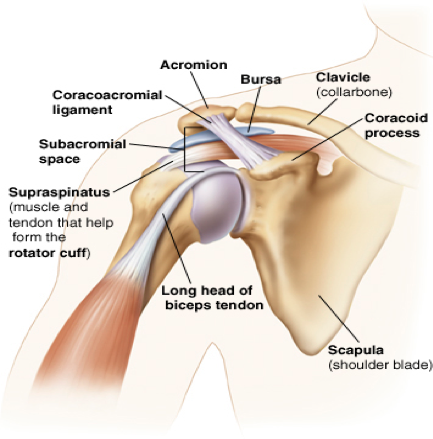


In frozen shoulder, evidence shows synovial inflammation and a dense matrix of type I and III collagen laid down by fibroblasts in the joint capsule. Increased growth factors and cytokines have been biopsied in patients which indicate it also involves an inflammatory condition. The scar formation greatly intrudes upon the space needed for movement within the joint. Frozen shoulder comes on gradually with signs and symptoms worsening over time. There are three main stages in which this occurs. The first is called the freezing stage which occurs when any movement of the shoulder causes pain and the range of motion becomes limited. This stage typically lasts from 6 weeks to 9 months. The frozen stage comes second in which pain may start to diminish. However, the shoulder becomes stiffer and more difficult to use. Lastly is the thawing stage. In this stage, the range of motion begins to improve and the pain can subside. This stage usually occurs 1-3 years after the shoulder becomes frozen.
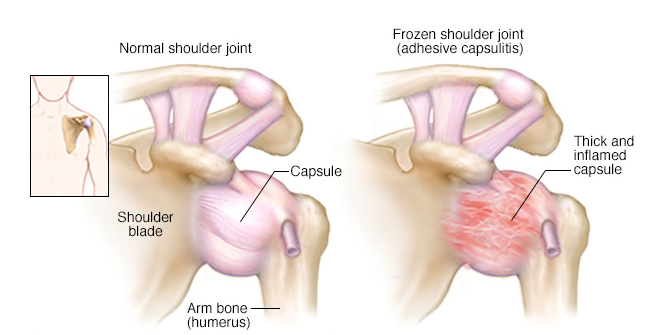


Although the most recognized pathology is cytokine-mediated synovial inflammation with fibroblastic proliferation, the actual cause of frozen shoulder is not fully understood although there are some identified risk factors. Diabetes patients have a higher risk of developing frozen shoulder although the reason is not known. These patients typically have a greater degree of stiffness for longer periods of time before the thawing stage occurs. Hypothyroidism, hyperthyroidism, Parkinson’s, and cardiovascular disease are all associated with frozen shoulder. Besides for other health conditions, immobilization is thought to play a big role in the development of frozen shoulder. When the shoulder is immobilized for long periods of time such as when an injury like a fracture or surgery like a mastectomy occurs.

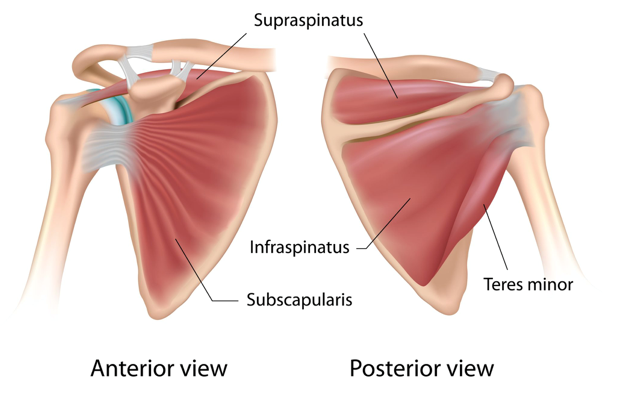
There are muscles and tendons that work together in the shoulder to provide stability to the ball and socket joint. The rotator cuff muscles including the subscapularis, supraspinatus, infraspinatus, and the teres minor work together to stabilize the ball of the humerus to the glenoid socket. These four muscles form the rotator cuff that comes together with the tendon around the humeral head and secure it firmly to the socket. The rotator cuff tendon covers the head of the humerus to protect the glenohumeral joint and help raise and rotate the arm. Certain occupations or sports activities can put great demand on the rotator cuff muscles causing muscle injuries with inflammation and scar tissue formation. Patients will experience upper back pain as well as reduced range of motion of the shoulder joint.


Rotator Cuff Injury

A rotator cuff injury is usually a strain or tear involving the tendons and joint capsule of the rotator cuff. This can occur from a single traumatic incident such as a broken collarbone and dislocated shoulder or from degenerative changes. The most common rotator cuff injury is the rotator cuff tear of the supraspinatus tendon due to degenerative changes of the tendon occurred from the preceding tendinosis. Tendinosis of the rotator cuff tendons can be caused by repetitive movements in a sport or daily life such as overhead arm movements, a reduction of blood supply to the region, or poor posture.
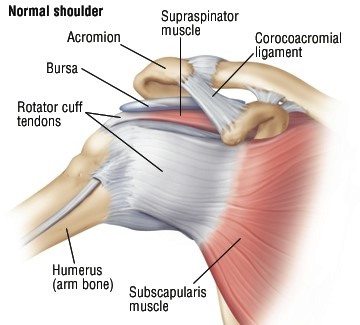


Symptoms of a rotator cuff injury typically include recurrent pain especially during certain activities, pain that prevents the patient from sleeping on the injured side, grating or cracking sounds when the arm is moved. The injury can cause decreased range of motion and muscle weakness and therefore patients will experience similar difficulty in lifting their arms and moving their shoulders that occurs in a frozen shoulder condition.


Login as practitioner to view Wellness Recommendation.

Condition of the Month-January 2019
Frozen Shoulder & Rotator Cuff Injury

Login as practitioner to view Wellness Recommendation.


Frozen shoulder

Frozen shoulder, also called adhesive capsulitis, is a condition in which the soft tissue capsule that surrounds the glenohumeral joint (shoulder joint) begins to stiffen causing pain and decreased range of motion. The shoulder is a ball-and-socket joint made up of three bones including the humerus (upper arm bone), scapula (shoulder blade), and clavicle (collarbone). The head of the humerus fits into the socket in the shoulder blade where a strong connective tissue, called the shoulder capsule, surrounds the joint. Synovial fluid lubricates the shoulder capsule and the joint to aid in range of motion.


In frozen shoulder, evidence shows synovial inflammation and a dense matrix of type I and III collagen laid down by fibroblasts in the joint capsule. Increased growth factors and cytokines have been biopsied in patients which indicate it also involves an inflammatory condition. The scar formation greatly intrudes upon the space needed for movement within the joint. Frozen shoulder comes on gradually with signs and symptoms worsening over time. There are three main stages in which this occurs. The first is called the freezing stage which occurs when any movement of the shoulder causes pain and the range of motion becomes limited. This stage typically lasts from 6 weeks to 9 months. The frozen stage comes second in which pain may start to diminish. However, the shoulder becomes stiffer and more difficult to use. Lastly is the thawing stage. In this stage, the range of motion begins to improve and the pain can subside. This stage usually occurs 1-3 years after the shoulder becomes frozen.


Although the most recognized pathology is cytokine-mediated synovial inflammation with fibroblastic proliferation, the actual cause of frozen shoulder is not fully understood although there are some identified risk factors. Diabetes patients have a higher risk of developing frozen shoulder although the reason is not known. These patients typically have a greater degree of stiffness for longer periods of time before the thawing stage occurs. Hypothyroidism, hyperthyroidism, Parkinson’s, and cardiovascular disease are all associated with frozen shoulder. Besides for other health conditions, immobilization is thought to play a big role in the development of frozen shoulder. When the shoulder is immobilized for long periods of time such as when an injury like a fracture or surgery like a mastectomy occurs.

There are muscles and tendons that work together in the shoulder to provide stability to the ball and socket joint. The rotator cuff muscles including the subscapularis, supraspinatus, infraspinatus, and the teres minor work together to stabilize the ball of the humerus to the glenoid socket. These four muscles form the rotator cuff that comes together with the tendon around the humeral head and secure it firmly to the socket. The rotator cuff tendon covers the head of the humerus to protect the glenohumeral joint and help raise and rotate the arm. Certain occupations or sports activities can put great demand on the rotator cuff muscles causing muscle injuries with inflammation and scar tissue formation. Patients will experience upper back pain as well as reduced range of motion of the shoulder joint.


Rotator Cuff Injury

A rotator cuff injury is usually a strain or tear involving the tendons and joint capsule of the rotator cuff. This can occur from a single traumatic incident such as a broken collarbone and dislocated shoulder or from degenerative changes. The most common rotator cuff injury is the rotator cuff tear of the supraspinatus tendon due to degenerative changes of the tendon occurred from the preceding tendinosis. Tendinosis of the rotator cuff tendons can be caused by repetitive movements in a sport or daily life such as overhead arm movements, a reduction of blood supply to the region, or poor posture.


Symptoms of a rotator cuff injury typically include recurrent pain especially during certain activities, pain that prevents the patient from sleeping on the injured side, grating or cracking sounds when the arm is moved. The injury can cause decreased range of motion and muscle weakness and therefore patients will experience similar difficulty in lifting their arms and moving their shoulders that occurs in a frozen shoulder condition.
Login as practitioner to view Wellness Recommendation.


Explore Wei Laboratories