Conditions
Bell’s Palsy Protocol Acid Reflux and GERD Acne Protocol Allergies, Asthma, and Eczema Anemia Ankylosing Spondylitis Protocol Arrhythmia and Afib Protocol Asthma Protocol Atherosclerosis ATP + Attention Deficit Hyperactivity Disorder (ADHD) Atypical Bacterial and Mycobacterial Infections- Respiratory Avascular Necrosis & PS Baker's Cyst Bone Fracture Protocol Bone Spur Bronchiectasis Bulging and Herniated Disc Protocol Bunion Bursitis C. Difficile Cancer Care Candida & Fungal Infections Protocol Cardiovascular Cataracts Protocol Chronic Kidney Disease (CKD) Protocol Cold and Flu Concussion Treatment COPD, Emphysema, and Chronic Bronchitis Protocol Cyst Protocol Cystic Fibrosis Digestive Tract Bacterial and Viral Infections Diverticulitis Dupuytren Contracture Ear Infection & Tinnitus Eczema & Atopic Dermatitis Erectile Dysfunction (ED) Protocol Fatty Liver Disease & Hepatitis Protocol Female Infertility Fibromyalgia Food Allergies and Intolerances Frozen Shoulder & Rotator Cuff Injury Gallbladder Stone Glaucoma & Cataracts Protocol Gout Hair Loss Protocol Hashimoto's Thyroiditis Heart Inflammation Heavy Metal Toxicity Hernia High Blood Pressure Hip Pain Protocol Hyperlipidemia (High Cholesterol) IBD, Ulcerative Colitis, Crohn's Disease IBS Insomnia Kidney Stone Leaky Gut Liver Cirrhosis Long COVID Symptoms Low Testosterone Lupus Lyme Disease Macular Degeneration Male Infertility Men's Health Meniscus and Cartilage Tear Menopause Migraine and Headache Nervous System Viral Infections and Complications Neuropathy OA Customized Treatment Osteoarthritis and Bone-on-Bone Protocol Parasite Infection Protocol Parkinson's Disease PMS, Post Menstrual Syndrome, & Premenstrual Dysphoric Disorder Post-Surgical Wound Healing and Scar Removal Protocol Post-Viral Syndrome Prostate Enlargement Psoriasis and Psoriatic Arthritis Pulmonary Fibrosis & ILD Rheumatoid Arthritis Sarcoidosis Protocol Sinusitis Sinusitis and Nasal Congestion Protocol Skin & Nail Fungal Infections Protocol Sleep Apnea Protocol Sprains and Strains Staph & Strep Infections Stenosis and Bone Spur Stress, Anxiety, Depression Stress, Anxiety, PTSD and Depression Stroke and Post-Stroke Recovery Teeth & Gums Protocol Telomere + Tendinitis Thyroid Disorders Thyroid Disorders Protocol TMJ Syndrome Treatment Sequence Type II Diabetes Urinary Incontinence & Pelvic Organ Prolapse Protocol Uterine Fibroids & Ovarian Cysts UTI Viral Infections Vitiligo Protocol WeiDetox Weight Control Women's Health
Quick Links
Find a Practitioner Practitioner Sign Up Contact Us Subscribe to Monthly Newsletter
Condition
Bell’s Palsy Protocol Acid Reflux and GERD Acne Protocol Allergies, Asthma, and Eczema Anemia Ankylosing Spondylitis Protocol Arrhythmia and Afib Protocol Asthma Protocol Atherosclerosis ATP + Attention Deficit Hyperactivity Disorder (ADHD) Atypical Bacterial and Mycobacterial Infections- Respiratory Avascular Necrosis & PS Baker's Cyst Bone Fracture Protocol Bone Spur Bronchiectasis Bulging and Herniated Disc Protocol Bunion Bursitis C. Difficile Cancer Care Candida & Fungal Infections Protocol Cardiovascular Cataracts Protocol Chronic Kidney Disease (CKD) Protocol Cold and Flu Concussion Treatment COPD, Emphysema, and Chronic Bronchitis Protocol Cyst Protocol Cystic Fibrosis Digestive Tract Bacterial and Viral Infections Diverticulitis Dupuytren Contracture Ear Infection & Tinnitus Eczema & Atopic Dermatitis Erectile Dysfunction (ED) Protocol Fatty Liver Disease & Hepatitis Protocol Female Infertility Fibromyalgia Food Allergies and Intolerances Frozen Shoulder & Rotator Cuff Injury Gallbladder Stone Glaucoma & Cataracts Protocol Gout Hair Loss Protocol Hashimoto's Thyroiditis Heart Inflammation Heavy Metal Toxicity Hernia High Blood Pressure Hip Pain Protocol Hyperlipidemia (High Cholesterol) IBD, Ulcerative Colitis, Crohn's Disease IBS Insomnia Kidney Stone Leaky Gut Liver Cirrhosis Long COVID Symptoms Low Testosterone Lupus Lyme Disease Macular Degeneration Male Infertility Men's Health Meniscus and Cartilage Tear Menopause Migraine and Headache Nervous System Viral Infections and Complications Neuropathy OA Customized Treatment Osteoarthritis and Bone-on-Bone Protocol Parasite Infection Protocol Parkinson's Disease PMS, Post Menstrual Syndrome, & Premenstrual Dysphoric Disorder Post-Surgical Wound Healing and Scar Removal Protocol Post-Viral Syndrome Prostate Enlargement Psoriasis and Psoriatic Arthritis Pulmonary Fibrosis & ILD Rheumatoid Arthritis Sarcoidosis Protocol Sinusitis Sinusitis and Nasal Congestion Protocol Skin & Nail Fungal Infections Protocol Sleep Apnea Protocol Sprains and Strains Staph & Strep Infections Stenosis and Bone Spur Stress, Anxiety, Depression Stress, Anxiety, PTSD and Depression Stroke and Post-Stroke Recovery Teeth & Gums Protocol Telomere + Tendinitis Thyroid Disorders Thyroid Disorders Protocol TMJ Syndrome Treatment Sequence Type II Diabetes Urinary Incontinence & Pelvic Organ Prolapse Protocol Uterine Fibroids & Ovarian Cysts UTI Viral Infections Vitiligo Protocol WeiDetox Weight Control Women's Health
Condition of the Month-January 2020
Urinary Tract Infection Protocol

Login as practitioner to view Wellness Recommendation.


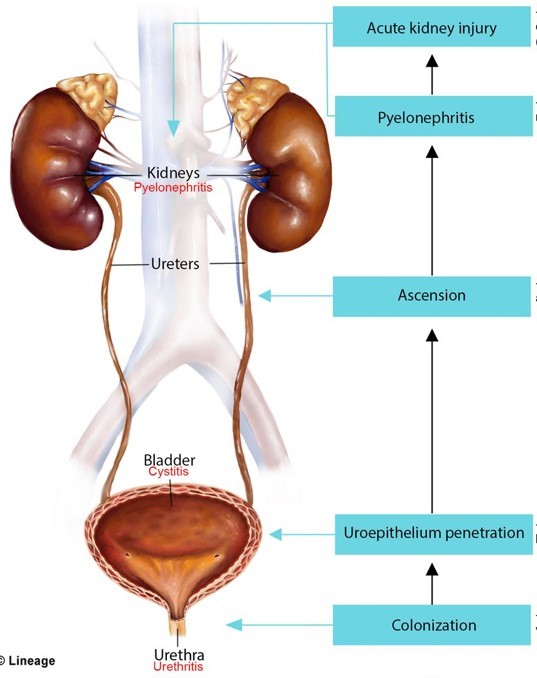
Urinary tract infections (UTIs) can affect any part of the urinary system including the kidneys, ureters, bladder, and urethra. Most infections occur in the lower part of the urinary system; the bladder and urethra. 90% of UTIs are caused by the gram-negative bacterium, Escherichia coli (E. coli). Women are at a greater risk of developing a UTI due to the shorter distance from the urethral opening to the bladder. This shortens the distance that bacteria must travel to reach the bladder and begin to multiply.


E. coli secretes many molecules that help it bind to urinary tract tissue. This allows the bacteria to stay within the urinary tract even during urine excretion. In patients with recurrent bladder infections, E. coli can form biofilms within the bladder making it resistant to antibiotics.

Common symptoms of a UTI include a strong and persistent urge to urinate, a burning sensation when urinating, passing a frequent and small amount of urine, urine that appears cloudy, strong-smelling urine, and pelvic pain. Symptoms can vary depending on where the infection occurs. If the infection only affects the urethra, the symptoms include burning with urination and discharge. If the infection spreads into the kidneys (acute pyelonephritis), symptoms can include back and flank pain, high fever, shaking and chills, nausea, and vomiting. If not addressed properly, UTIs can lead to complications. Permanent kidney damage can occur from an acute or chronic kidney infection (pyelonephritis) when bacteria ascend from the ureters into the kidneys.

E. coli can also suppress the immune system by breaking down communication channels and decreasing cytokine activity. This can cause bladder infections by multiple strains of bacteria. E. coli can invade the underlying basal epithelium to protect itself from clearance through exfoliation of bladder luminal surface and can lay dormant for several months. These patients are at an even greater risk of recurrent infections.

Interstitial cystitis can develop when the bladder remains in a chronically inflamed condition. Pinpoint areas of bleeding develop in the bladder wall and scar tissue can form that causes the bladder to become stiff and less able to expand. The capacity of the bladder is markedly reduced. Irritants in the urine can leak into the interstitium through the scar tissue and irritate the nerve endings causing an abnormally high urination frequency, urgency, pressure and/or pain in the bladder, and pelvic pain. Patients may need to go to the bathroom at least once every hour. The sense of urgency can be present immediately after urination. The inflamed tissue makes it even more likely for recurrent and frequent infections to occur.

In rare cases, patients with UTIs can also be infected by atypical bacteria, such as mycobacteria or fungus due to their immune system being suppressed by E. coli. Mycobacteria can cause infections and inflammation of the urinary tract causing urethritis. Symptoms of urethritis include abnormal discharge and a burning sensation while urinating. Kidney infections by mycobacteria can cause kidney inflammation, kidney cysts, scars, and chronic kidney disease in severe cases. Symptoms of kidney mycobacterial infections include back, flank, and suprapubic pain; hematuria or dark-colored urine; increased urination frequency, burning or irritation with urination, increased urination at night, or bubbles in urine. Other symptoms may include body heaviness, tiredness, and muscle weakness.

Fungal infections of the bladder and urinary tract can cause cystitis due to irritation and damage to the bladder and urinary tract lining. Patients may experience symptoms of frequent urination, urination urgency, pain and burning with urination, and suprapubic pain. Fungal infections of the bladder can spread to the kidneys. The thick cell walls of the fungus are very toxic to the kidneys and can cause kidney inflammation. Symptoms of kidney fungal infections include difficulty urinating. Patients may also have an increased sense of urination but cannot pass the urine out. This is the opposite of a kidney mycobacterial infection which causes frequent urination.


Login as practitioner to view Wellness Recommendation.

Condition of the Month-January 2020
Urinary Tract Infection Protocol

Login as practitioner to view Wellness Recommendation.


Urinary tract infections (UTIs) can affect any part of the urinary system including the kidneys, ureters, bladder, and urethra. Most infections occur in the lower part of the urinary system; the bladder and urethra. 90% of UTIs are caused by the gram-negative bacterium, Escherichia coli (E. coli). Women are at a greater risk of developing a UTI due to the shorter distance from the urethral opening to the bladder. This shortens the distance that bacteria must travel to reach the bladder and begin to multiply.


E. coli secretes many molecules that help it bind to urinary tract tissue. This allows the bacteria to stay within the urinary tract even during urine excretion. In patients with recurrent bladder infections, E. coli can form biofilms within the bladder making it resistant to antibiotics.

Common symptoms of a UTI include a strong and persistent urge to urinate, a burning sensation when urinating, passing a frequent and small amount of urine, urine that appears cloudy, strong-smelling urine, and pelvic pain. Symptoms can vary depending on where the infection occurs. If the infection only affects the urethra, the symptoms include burning with urination and discharge. If the infection spreads into the kidneys (acute pyelonephritis), symptoms can include back and flank pain, high fever, shaking and chills, nausea, and vomiting. If not addressed properly, UTIs can lead to complications. Permanent kidney damage can occur from an acute or chronic kidney infection (pyelonephritis) when bacteria ascend from the ureters into the kidneys.

E. coli can also suppress the immune system by breaking down communication channels and decreasing cytokine activity. This can cause bladder infections by multiple strains of bacteria. E. coli can invade the underlying basal epithelium to protect itself from clearance through exfoliation of bladder luminal surface and can lay dormant for several months. These patients are at an even greater risk of recurrent infections.

Interstitial cystitis can develop when the bladder remains in a chronically inflamed condition. Pinpoint areas of bleeding develop in the bladder wall and scar tissue can form that causes the bladder to become stiff and less able to expand. The capacity of the bladder is markedly reduced. Irritants in the urine can leak into the interstitium through the scar tissue and irritate the nerve endings causing an abnormally high urination frequency, urgency, pressure and/or pain in the bladder, and pelvic pain. Patients may need to go to the bathroom at least once every hour. The sense of urgency can be present immediately after urination. The inflamed tissue makes it even more likely for recurrent and frequent infections to occur.

In rare cases, patients with UTIs can also be infected by atypical bacteria, such as mycobacteria or fungus due to their immune system being suppressed by E. coli. Mycobacteria can cause infections and inflammation of the urinary tract causing urethritis. Symptoms of urethritis include abnormal discharge and a burning sensation while urinating. Kidney infections by mycobacteria can cause kidney inflammation, kidney cysts, scars, and chronic kidney disease in severe cases. Symptoms of kidney mycobacterial infections include back, flank, and suprapubic pain; hematuria or dark-colored urine; increased urination frequency, burning or irritation with urination, increased urination at night, or bubbles in urine. Other symptoms may include body heaviness, tiredness, and muscle weakness.

Fungal infections of the bladder and urinary tract can cause cystitis due to irritation and damage to the bladder and urinary tract lining. Patients may experience symptoms of frequent urination, urination urgency, pain and burning with urination, and suprapubic pain. Fungal infections of the bladder can spread to the kidneys. The thick cell walls of the fungus are very toxic to the kidneys and can cause kidney inflammation. Symptoms of kidney fungal infections include difficulty urinating. Patients may also have an increased sense of urination but cannot pass the urine out. This is the opposite of a kidney mycobacterial infection which causes frequent urination.
Login as practitioner to view Wellness Recommendation.


Explore Wei Laboratories